
English


Choosing the 2026 best Automatic Labeling Machine requires more than comparing speed or price. Global buyers face different containers, label materials, climates, and compliance requirements. A machine that labels 120 bottles per minute may struggle with dusty glass jars or uneven pouches.
Industry reports support this demand for flexible automation. Smithers’ “The Future of the Global Label Market to 2028” identifies packaging growth, product differentiation, and traceability as major market drivers. PMMI reports also highlight automation, quick changeovers, and connected equipment as important packaging investment priorities. These trends affect real purchasing decisions. Buyers increasingly need machines that handle multiple formats, verify label placement, and record production data.
The right Automatic Labeling Machine should match the product before matching the marketing claim. Check container diameter, label width, adhesive performance, conveyor speed, and expected daily volume. Ask suppliers to test your actual bottles, cartons, or pouches. Watch the label pass the sensor. Inspect the edge after twenty minutes.
Small details matter.
A reliable machine should provide stable application accuracy, accessible controls, safety guarding, and dependable technical support. Global purchasers should also confirm voltage compatibility, spare-parts availability, operator training, and documentation quality. These factors reduce hidden downtime after installation. However, no machine is perfect for every factory. A faster model may create more waste during changeovers, while a lower-cost unit may require closer operator attention. This comparison needs honest testing, not only brochure specifications. Based on published market research and practical evaluation, this guide examines leading options for different industries, production scales, and operating environments in 2026.
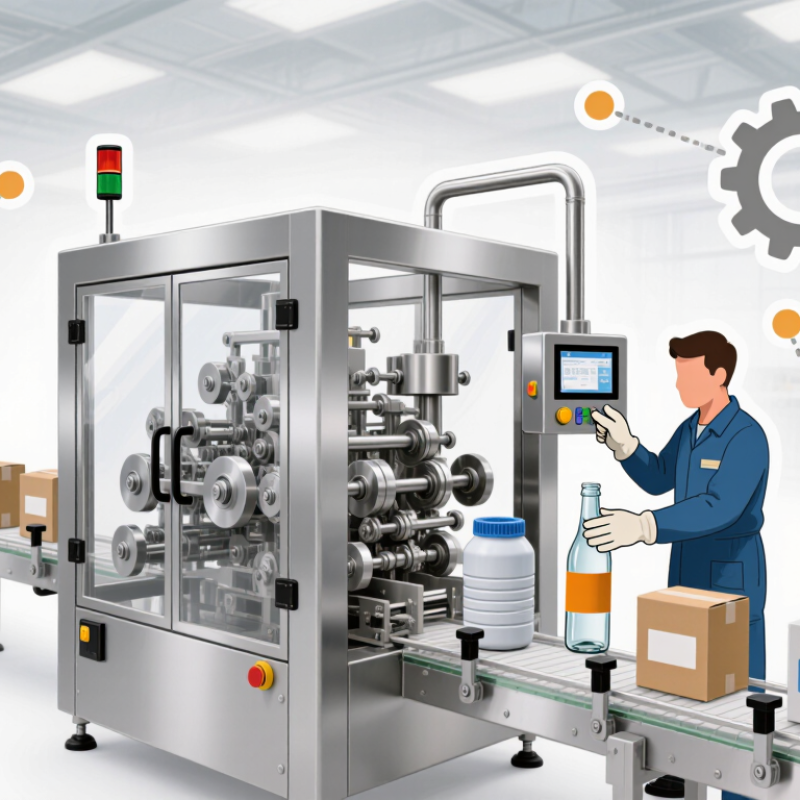
An automatic labeling machine applies labels to products, containers, or packages with limited manual handling. A typical system uses a conveyor, product sensor, label dispenser, drive motor, and control panel. The sensor detects each item. The dispenser then positions the label at a controlled speed and pressure.
Some machines apply front labels, wraparound labels, top labels, or tamper-evident labels. Others combine labeling with printing, coding, or inspection. In practical factory use, container shape matters greatly. A round bottle needs different control from a flat carton. Surface moisture, dust, and label adhesive also affect accuracy.
Speed is only one measure.
The market is expanding. Grand View Research reports that the global packaging machinery market was valued at more than USD 50 billion in 2023, with automation supporting faster production and reduced labor dependence. Smithers’ industry analysis also identifies continued growth in global label demand through 2028, driven by food, beverage, healthcare, and logistics packaging. These reports describe broad market trends, not guaranteed machine performance.
Experienced buyers should examine label tolerance, changeover time, reject handling, and maintenance access. A specification claiming 120 products per minute may apply only to one container size and stable conditions. Real production can be slower. That gap deserves testing before purchase. A reliable evaluation uses the buyer’s actual products, labels, adhesive, and line speed. The best automatic labeling machine is not always the fastest model. It is the one that labels consistently, safely, and economically across daily operating conditions.
QUICK LINKS
CONTACT US
Office: (+86) 755 23040566
Tel: (+86) 158 9965 5195
E-mail: sale@pcbledmodule.com
Skype: Hans@Rocket-PCB
Whatsapp: 86 1589965 5195
Office Address: 2207,Bid 4,He Gu Shan Hui Cheng,35#,Guang Tian RoYanluo street, Song Gang Town,518105 SHENZHENG, CHINA
Plant ADD.: No 69, Lianfeng North Road, Xianxi Area, ChangAn Town, Dongguan, China.


Copyright © 2025 Rocket PCB Solution Ltd. | All Rights Reserved Sitemap Friendship link: CNC machining heat sink