
English


China has become a major source of electric drive systems for international vehicle manufacturers. This guide examines the 2026 market for an EV e-axle supplier China, focusing on engineering capability, production scale, and export reliability.
An e-axle combines the motor, inverter, reduction gear, and differential in one compact unit. That integration can reduce weight, wiring, and assembly time. However, impressive specifications do not guarantee dependable field performance. Buyers should inspect continuous torque, peak efficiency, thermal control, sealing, noise, vibration, and endurance-test records. A polished brochure is not enough.
Professor Guo Konghui, a respected Chinese automotive engineer, has emphasized a practical principle: “The whole vehicle system must work together.” This view matters when comparing suppliers. An e-axle may perform well on a test bench, yet struggle after installation because of calibration, cooling, software, or suspension differences. Small details matter. Connector protection. Gear oil control. Service access.
This overview will compare leading Chinese suppliers through an international buyer’s perspective. It considers prototype support, customized mounting points, voltage compatibility, certification preparation, delivery consistency, and after-sales response. Some companies offer excellent motors but limited overseas support. Others provide strong documentation but less flexible engineering. That trade-off deserves attention.
The ranking should not be treated as permanent. New factories appear, partnerships change, and real-world vehicle data can revise early impressions. Buyers should still conduct independent audits, sample testing, and commercial due diligence before signing contracts. That caution is not pessimism. It is basic engineering discipline.
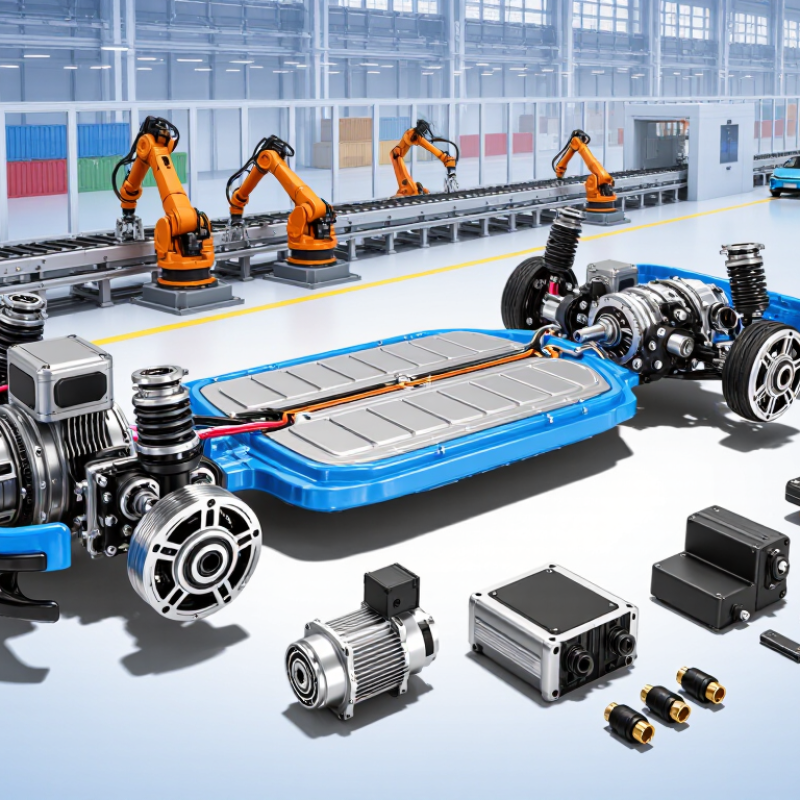
An EV e-axle is a compact electric drive unit mounted across an axle. It usually combines an electric motor, inverter, reduction gears, and differential. This layout replaces several separate drivetrain components. It also frees space around the vehicle floor.
The working process is direct. The battery sends direct current to the inverter. The inverter changes it into controlled alternating current. That current creates a rotating magnetic field inside the motor. Gears then increase wheel torque, while the differential manages different wheel speeds during cornering. During braking, the motor can work as a generator. It sends part of the kinetic energy back to the battery. The sensation is often smooth, but calibration still matters.
The International Energy Agency reported nearly 14 million electric cars sold globally in 2023. Electric vehicles represented about 18% of new car sales. This growth increases demand for efficient, compact axle systems. The U.S. Department of Energy notes that modern electric-drive systems can achieve very high conversion efficiency, often above 90% under suitable conditions. Real vehicles perform less consistently. Tire losses, heat, traffic, and software settings change the result.
For global buyers, evaluation should include continuous power, peak torque, voltage range, cooling performance, noise, vibration, and durability testing. A lighter e-axle is not automatically better. Thin housings may reduce mass but increase vibration risks. Suppliers should provide test methods, thermal maps, service data, and traceable production records. The details are easy to overlook. That can become expensive.
QUICK LINKS
CONTACT US
Office: (+86) 755 23040566
Tel: (+86) 158 9965 5195
E-mail: sale@pcbledmodule.com
Skype: Hans@Rocket-PCB
Whatsapp: 86 1589965 5195
Office Address: 2207,Bid 4,He Gu Shan Hui Cheng,35#,Guang Tian RoYanluo street, Song Gang Town,518105 SHENZHENG, CHINA
Plant ADD.: No 69, Lianfeng North Road, Xianxi Area, ChangAn Town, Dongguan, China.


Copyright © 2025 Rocket PCB Solution Ltd. | All Rights Reserved Sitemap Friendship link: CNC machining heat sink