
English


Choosing a computar telecentric lens is not simply a matter of selecting the highest magnification. Industrial vision systems depend on stable measurements, consistent lighting, and careful mechanical alignment. A lens that looks impressive on a specification sheet may still disappoint beside a vibrating conveyor or reflective metal part.
This guide presents seven practical tips for evaluating a computar telecentric lens. It considers object size, sensor compatibility, working distance, field of view, depth of field, and illumination. It also examines distortion performance, because even small edge errors can affect dimensional inspection. Check the entire imaging system. Do not judge the lens alone.
Real testing matters.
Place representative parts under the intended camera and lighting setup. Observe holes, edges, threads, and height changes at the image borders. Record repeatability across several captures, not one successful frame. Confirm the lens mount, aperture range, and required back focal distance before ordering. These details are easy to overlook. They can create expensive delays.
A careful selection process should also include supplier documentation, calibration support, and replacement availability. Computar offers established optical products, yet suitability still depends on your application. No single lens fits every inspection task. That assumption needs questioning. A thoughtful comparison may reveal that a less powerful model provides better contrast, easier integration, or more reliable measurements. Use these seven tips as a practical starting point, then validate the final choice with real samples and measured results.
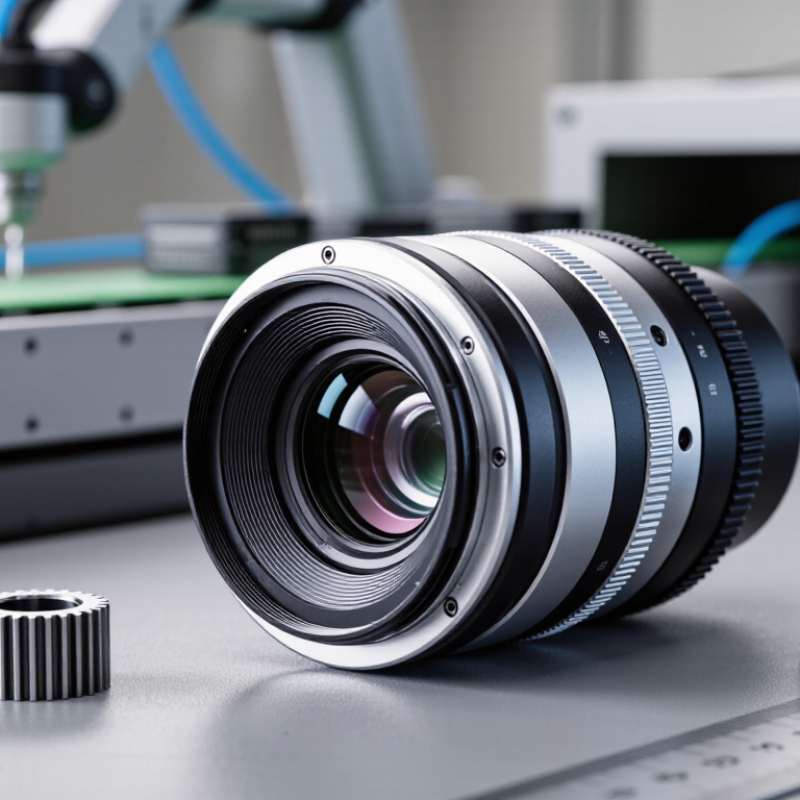
Choosing a telecentric lens starts with the image, not the lens catalog. Define the object size, field of view, working distance, sensor format, pixel size, and acceptable measurement error. A 0.05 mm tolerance needs a different setup from simple presence detection. The 2024 MarketsandMarkets Machine Vision report projects strong industry growth, but higher automation does not remove basic optical limits.
Tip 1: Write the smallest feature you must resolve.
Tip 2: Calculate magnification from the sensor and field of view. Then check whether the required working distance fits the machine layout. Telecentric optics reduce perspective distortion, which helps when measuring holes, edges, and molded parts. However, they cannot repair motion blur, poor lighting, or a scratched target. EMVA 1288 testing practice recommends evaluating signal-to-noise ratio, dynamic range, and sensitivity under defined conditions. Use those measurements, not only a sharp sample image.
Tip 3: Match the lens to the sensor diagonal and active pixels. A mismatched image circle can create dark corners or waste resolution.
Tip 4: Set the depth range before ordering. Even telecentric imaging has practical limits.
Tip 5: Test the real material, including reflective metal, black plastic, and transparent surfaces. This is where many plans become optimistic. I have seen a lens perform well on a clean sample, then fail beside an oily production part.
Tip 6: Record lighting angle and exposure time.
Tip 7: Keep a calibration target in the evaluation. It exposes small errors early.
QUICK LINKS
CONTACT US
Office: (+86) 755 23040566
Tel: (+86) 158 9965 5195
E-mail: sale@pcbledmodule.com
Skype: Hans@Rocket-PCB
Whatsapp: 86 1589965 5195
Office Address: 2207,Bid 4,He Gu Shan Hui Cheng,35#,Guang Tian RoYanluo street, Song Gang Town,518105 SHENZHENG, CHINA
Plant ADD.: No 69, Lianfeng North Road, Xianxi Area, ChangAn Town, Dongguan, China.


Copyright © 2025 Rocket PCB Solution Ltd. | All Rights Reserved Sitemap Friendship link: CNC machining heat sink