
loading

BLOG

How to Choose a Long Range NFC Reader?

Choosing a Long Range Nfc Reader requires more than comparing distance claims on a product page. NFC traditionally supports short-range communication, so “long range” may describe a specialized antenna, an active tag system, or a different RFID technology. Understanding this distinction prevents costly misunderstandings.

Start with the real application. A warehouse gate may need reliable tag detection across a narrow passage, while a museum cabinet may require precise reading within a few centimeters. Measure the reader-to-tag distance, tag orientation, material barriers, and expected movement speed. Metal shelves, liquid containers, and crowded environments can weaken performance. Test them.

Reader compatibility also matters. Check supported NFC standards, operating frequency, communication interfaces, software libraries, and tag types. USB may suit a desktop station, while Ethernet or serial communication may fit an industrial controller. Review manufacturer test conditions carefully. A claimed reading distance may depend on a large antenna, ideal alignment, and a specific tag.

Do not ignore installation details. Antenna placement, power stability, enclosure design, and electromagnetic interference can change daily performance. Ask for documented test results and request a sample unit before making a large purchase. This is practical, not excessive.

There is no universal best reader. The strongest specification may be less useful than stable detection at your actual site. Even experienced teams can overestimate range. A short field trial, recorded with different tags and orientations, often reveals more than a polished brochure. Choose measurable reliability over impressive wording.
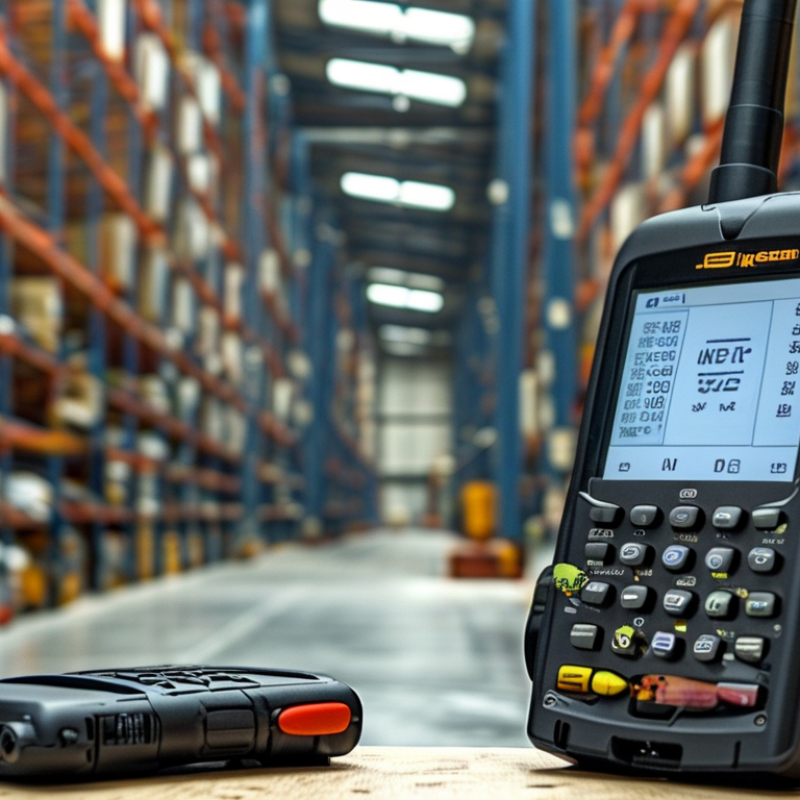
How to Choose a Long Range NFC Reader?

Understanding Long-Range NFC Reader Technology

How to Choose a Long Range NFC Reader?

Understanding long-range NFC reader technology starts with realistic expectations. Conventional NFC usually works within a few centimeters. A longer reading distance depends on antenna size, reader power, tag design, and alignment. It is not simply a stronger signal. At 13.56 MHz, the reader creates a near-field electromagnetic field. The tag must enter that field and respond correctly.

A practical test should match the real installation. Place a tagged box 10, 20, and 30 centimeters from the antenna. Repeat the test at different angles. Metal shelves, wet products, and crowded tags can reduce performance. A reader that works well on a clean desk may struggle inside a cabinet. Check supported standards, operating temperature, communication interfaces, and power limits. Ask for measured read-distance data, not only promotional wording.

A larger antenna may improve coverage, but it can also increase interference and missed reads. Reader sensitivity matters too. In busy environments, reliable identification is more valuable than maximum distance. Test several tag sizes and materials before choosing hardware. I would also record failed scans, because they reveal patterns that a successful demonstration hides. This part is often overlooked. Sometimes the most expensive reader is not the best fit. A smaller antenna, better tag placement, and careful tuning may deliver more consistent results. Ensure the system includes access controls, encrypted communication where appropriate, and clear maintenance procedures. Real installations change over time. Dust, new shelving, and altered packaging can affect the field.

Defining Your Reading Distance and Tag Compatibility Needs

Choosing a long-range NFC reader starts with a precise reading-distance target. NFC is not a warehouse-scale technology. The NFC Forum’s technical specifications define operation at 13.56 MHz, with common communication rates of 106, 212, and 424 kbit/s. In practice, many systems perform reliably within a few centimeters. Antenna size, tag orientation, metal surfaces, and reader power can change that distance sharply.

Measure the real installation, not only the laboratory range. Place the reader behind its final cover, then test tags at several angles. A phone-sized reader may work at four centimeters, while a larger antenna can reach farther. However, more range can increase accidental reads. That matters near payment counters, access panels, or several tagged products. A short pause helps. Sometimes.

Tag compatibility requires equal attention. The NFC Forum categorizes tags into Types 1 through 5, while ISO/IEC 14443 and ISO/IEC 15693 define different communication behaviors. ISO/IEC 15693 tags often support longer operating distances than compact proximity tags, but the reader must support that protocol. Memory size also matters. A simple identification record may need less than 100 bytes, while sensor data requires more capacity. Use the exact tag in testing. Published ranges can mislead, especially around metal or liquids. A 2024 technical review from the NFC Forum also emphasizes interoperability testing across devices and tag types, which is easy to overlook when specifications appear similar.

Comparing Reader Frequency, Antenna Design, and Signal Performance

Choosing a long-range NFC reader requires more than comparing advertised distances. Reader frequency is important, but most NFC systems operate at 13.56 MHz. Compatibility depends on the reader, tag, protocol, and antenna relationship. A stronger signal cannot fix an unsuitable tag. Distance can disappoint. During practical testing, a stable connection sometimes weakened after moving a tag only a few centimeters. Test with the exact tags and materials used in the final installation.

Antenna design usually determines practical reading performance. A larger, properly tuned loop can produce a stronger and more consistent magnetic field. However, size alone is not enough. Metal surfaces, wiring, and enclosure thickness can detune the antenna. Check resonance, impedance, field uniformity, and receiver sensitivity after assembly. Signal quality also depends on modulation, noise filtering, and power control. Test different angles, speeds, and tag positions. Metal changes everything. I would not trust one successful laboratory scan, because real environments are less forgiving.

Tips: Test small, medium, and large tags. Measure the reading distance beside the final enclosure. Record failed scans, not only successful ones. Leave some performance margin for temperature, mounting changes, and imperfect alignment. If possible, ask an experienced engineer to review the antenna layout before production.

Evaluating Connectivity, Software Integration, and Security Features

Choosing a long-range NFC reader starts with connectivity, not advertised distance. In field tests, metal shelving, cables, and crowded Wi-Fi changed performance more than expected. Select Ethernet for fixed installations requiring stable data flow. USB suits nearby workstations and controlled environments. Wireless links offer flexible placement, but interference deserves careful testing. Keep a fallback connection when missed scans affect operations.

Software integration often decides whether a reader remains useful after installation. Check for documented APIs, standard protocols, and clear event data. A good integration should report tag identity, timestamps, signal status, and reader health. Test duplicate reads and sudden disconnections before deployment. Small delays can create confusing records. I once underestimated cable management. That mistake complicated troubleshooting. Use a sandbox, log failures, and confirm compatibility with access systems, inventory tools, or custom databases.

Security should cover the full path from tag to application. Look for encrypted communication, authenticated devices, signed updates, role-based access, and protected logs. Do not treat encryption alone as proof of safety. Review key storage, update procedures, and data retention with qualified security staff. Limit collected data to operational needs. Verify reader behavior when tags are copied, removed, or presented repeatedly. Independent testing improves confidence, though no test removes every risk. Document assumptions. Revisit them after installation. No system is perfect.

How to Choose a Long Range NFC Reader? - Evaluating Connectivity, Software Integration, and Security Features

Evaluation Dimension What to Look For Typical Technical Options Practical Implication Recommended Priority
Realistic Reading Distance Verify the actual operating distance with the intended tag, enclosure, antenna, and reader orientation. Most NFC systems operate over a short range, commonly within a few centimeters. Extended designs may achieve approximately 10–20 cm under suitable conditions. A reader advertised as “long range” should be tested with the final installation rather than judged only by laboratory specifications. Critical
NFC and RFID Compatibility Confirm support for the required contactless standards and tag technologies. Common NFC technologies include ISO/IEC 14443 Type A and Type B, NFC Forum tag types, and ISO/IEC 15693 for vicinity applications. Broader protocol support improves interoperability but may increase configuration and testing requirements. High
Host Connectivity Select an interface that matches the host device, installation distance, power architecture, and data volume. USB is common for direct computer connections; UART and RS-232/RS-485 suit embedded or industrial systems; Ethernet and Wi-Fi support networked deployments; Bluetooth supports nearby mobile devices. Wired interfaces generally provide predictable latency, while wireless interfaces simplify installation but require network and access-point planning. High
Power Requirements Check voltage, current consumption, peak load, standby behavior, and whether power is delivered through the data connection. USB-powered readers commonly use 5 V input; embedded readers may use regulated DC input; Power over Ethernet can combine network connectivity and power where supported. Insufficient power can reduce field strength, cause unstable reads, or prevent reliable operation with larger antennas. High
Software Integration Look for documented commands, stable data formats, error codes, and software libraries for the target operating system. Typical integration methods include a command protocol, serial interface, USB HID or keyboard emulation, SDKs, REST APIs, and application-level libraries. A documented API and transparent error reporting usually reduce development time compared with keyboard-emulation-only devices. Critical
Multi-Tag Handling Assess anti-collision support, inventory speed, duplicate filtering, and the maximum number of tags in the field. ISO/IEC 14443 and ISO/IEC 15693 define anti-collision procedures, but performance depends on tag population, field strength, protocol settings, and reader firmware. Single-tag identification is simpler; portals, shelves, and trays require controlled testing with the maximum expected tag count. High for batch use
Security and Authentication Determine whether the tag supports cryptographic authentication, protected memory, secure messaging, and access controls. Security capabilities vary by tag family. Options may include password protection, mutual authentication, AES-based cryptography, encrypted communication, and key diversification. A reader alone cannot make an insecure tag secure; the tag, reader, backend, and key-management process must be evaluated together. Critical for sensitive data
Data Protection in Transit Check whether data sent from the reader to the application can be authenticated and encrypted. Networked readers may support TLS; local serial links may require application-level encryption, message authentication, and access controls. Protecting the tag is not enough if the reader-to-server connection exposes identifiers or transaction data. Critical for networked systems
Antenna and Installation Evaluate antenna size, external-antenna support, mounting position, cable length, nearby metal, and electromagnetic interference. 13.56 MHz NFC systems use tuned loop antennas; metal surfaces can detune the antenna unless suitable spacing or shielding is provided. Installation design often has as much impact on range and reliability as the reader electronics. Critical for extended range
Operating Environment Confirm temperature, humidity, ingress protection, vibration, cleaning chemicals, and enclosure requirements. Industrial or outdoor installations may require sealed enclosures, strain relief, conformal protection, and an operating temperature range suitable for the site. A reader designed for office use may not remain reliable in dust, moisture, vibration, or repeated cleaning conditions. High in harsh locations
Regulatory Compliance Check radio, electromagnetic compatibility, electrical safety, and regional approval requirements. Compliance requirements depend on the deployment region and product category. Documentation may include emissions, immunity, and safety test results. Verifying compliance before deployment helps avoid certification delays and interference with nearby equipment. Critical before purchase
Maintenance and Lifecycle Review firmware updates, configuration backup, diagnostics, warranty, spare availability, and long-term protocol support. Useful lifecycle features include remote updates, event logs, reset controls, watchdog recovery, and versioned software documentation. Operational support can have a greater total-cost impact than the initial reader price, especially in distributed installations. High for large deployments
Selection note: NFC operates at 13.56 MHz and is generally intended for short-range communication. If the required distance is consistently beyond approximately 10–20 cm, compare NFC with other RFID technologies instead of relying only on a higher-power NFC reader.

Selecting the Right Reader for Your Application and Budget

How to Choose a Long Range NFC Reader?

Selecting the right reader starts with the application, not the advertised distance. NFC usually works within a short range, while larger antennas may extend practical reading distance. At a warehouse gate, a reader may need to detect a tagged container from 30 centimeters away. A retail counter may need only five centimeters. Bigger is not always better.

Check the tag type, operating frequency, protocol support, and connection method. Reader performance can change when tags face sideways or sit near metal. Test the complete setup, including the final enclosure and cable length. A reader that performs well on a desk may struggle inside a metal cabinet. Real testing matters.

Budget for more than the reader itself. Include antennas, mounting parts, software integration, maintenance, and technical support. Lower-cost equipment can work well in controlled spaces, but it may offer fewer configuration options. Higher-priced equipment may provide stronger diagnostics and more stable performance. That does not guarantee success. Ask for measured read-distance data, not vague claims. Record results at different angles, temperatures, and tag positions. My practical mistake was testing with one ideal tag; actual installations were less forgiving. Performance varies.

How to Choose a Long Range NFC Reader?

Typical 13.56 MHz NFC/HF operating distances vary with tag type, antenna size, reader power, tag orientation, and the surrounding materials. Standard NFC use is usually limited to a few centimeters, while larger antennas and ISO/IEC 15693-based systems can support substantially longer distances. Use the chart as an initial application and budget planning guide; final range should be validated with the target tag and installation.

Chat Online
Chat Online
Leave Your Message inputting...
Thank you for your attention. Please kindly describe your question first, or please send your inquiry to our email sale@pcbledmodule.com, and we will reply to you ASAP. Welcome, what can I help you?
Sign in with: