
Choosing a Fannicoo Led Corn Bulb for global markets requires more than comparing wattage and price. Buyers must match lighting performance with local voltage, socket type, climate, and compliance expectations. The International Energy Agency reports that lighting has represented roughly 15% of global electricity consumption. This makes efficient replacement lighting commercially important, not merely attractive. ENERGY STAR guidance also notes that qualified LED products can use up to 90% less energy than incandescent lamps and last much longer. Actual results still depend on design quality.
A practical evaluation begins with measurable details. Check lumens, rather than watts, to judge brightness. Confirm the base, such as E26, E27, or E40, before ordering samples. Review input voltage, frequency, color temperature, beam distribution, and rated life. For warehouses, workshops, or outdoor fixtures, examine heat dissipation and the appropriate IP rating. The U.S. Department of Energy’s solid-state lighting research highlights thermal management and driver reliability as important factors in LED performance. These points matter when a bulb operates for long hours in a closed fitting.
Fannicoo Led Corn Bulb may suit different replacement projects, but one specification cannot serve every country. Importers should request test reports, product labels, warranty terms, and batch consistency records. Independent verification is valuable. A bright sample does not prove long-term reliability. Buyers should also check regional safety and energy-efficiency requirements before shipment. No checklist is flawless. I have seen projects overlook socket depth and ambient heat, then face avoidable returns. Careful sampling, transparent documentation, and realistic performance comparisons create a safer purchasing decision for global buyers.
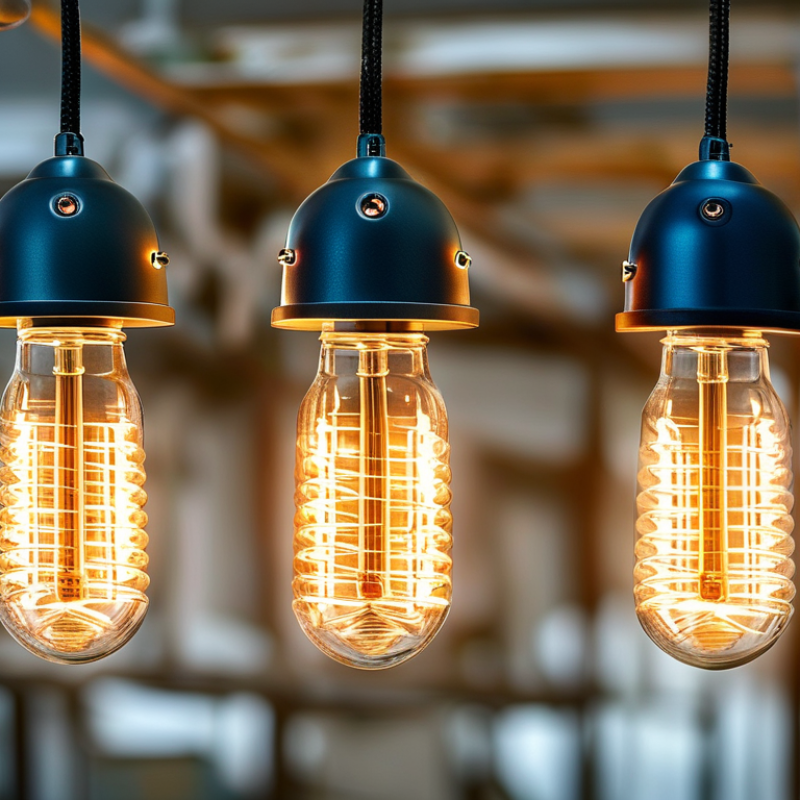
An LED corn bulb is a retrofit lamp shaped like an ear of corn. Its vertical LED rows replace traditional high-wattage HID or compact fluorescent lamps. It usually fits common sockets, such as E26, E27, or Mogul bases. The bulb directs light across a broad angle, making it useful for garages, warehouses, street fixtures, and outdoor lanterns.
It is not corn. The shape is functional. More LED surface area can improve light distribution and reduce concentrated heat. The U.S. Department of Energy reports that quality LED products commonly deliver over 100 lumens per watt. However, efficiency depends on temperature, driver quality, and installation. Heat matters. A sealed fixture may shorten the lamp’s life unless the product is specifically rated for it.
Global buyers should compare lumens, not watts alone. Check color temperature, such as 3000K for warmer spaces or 5000K for clearer work areas. A CRI of 80 or higher is a sensible baseline for general lighting. The International Energy Agency estimates that lighting uses about 15% of global electricity consumption, so efficient retrofits can affect operating costs. Still, a bigger lumen rating is not always better. Glare, socket direction, voltage range, and local certification can change the real result. I have found that small details often matter more than impressive packaging claims. Verify test reports, warranty terms, ingress protection, and compatibility before ordering internationally. An imperfect fit can waste the expected savings.
Global buyers should compare lighting specifications before comparing prices. Start with lumen output, not wattage, because lumens show the actual brightness. A 30-watt corn bulb may not match another 30-watt model. Check efficacy, measured in lumens per watt, and confirm the testing method. Color temperature also matters. Warm white around 3000K suits hospitality spaces, while 5000K supports workshops and warehouses. I once selected a cooler color for a retail area, and the products looked less inviting than expected.
Compare the base type, bulb dimensions, and input voltage carefully. A bulb may fit the socket but fail in a 110V or 220V system. Check frequency, dimming compatibility, beam angle, and power factor. For visual quality, review CRI, especially when accurate colors matter. Thermal design deserves attention too. Aluminum housing, ventilation space, and rated operating temperature affect long-term performance. Lifespan figures are useful, but they depend on installation conditions and daily usage. This is often overlooked.
Tips: Request a complete datasheet and a sample before bulk purchasing. Test brightness, color, heat, and startup behavior in the real fixture. Verify required safety documentation for the destination market. Ask whether performance data comes from independent testing. Also inspect packaging and labeling. Small details prevent expensive delays. Do not assume every specification is directly comparable. Manufacturers may use different test environments.
Which lighting specifications should global buyers compare? The chart shows representative, non-brand-specific lumen outputs commonly expected from LED corn bulbs at different power levels.
Use wattage and initial lumens to compare energy performance, then verify the datasheet for luminous efficacy, input voltage, frequency, color temperature, CRI, beam angle, base type, IP rating, operating temperature, power factor, and warranty. The benchmark values are typical market reference points and may vary by design and application.
How to Choose an LED Corn Bulb for Global Buyers
Matching the bulb base comes before comparing brightness. E26 and E27 look similar, but socket tolerances differ by market. E39 and E40 bases are common for high-output fixtures. Check the fixture label, thread size, and available clearance. A corn bulb with a heat sink may not fit inside a narrow glass cover. Measure first. A small mistake can stop installation.
Voltage needs equal attention. Common products support 100–277V, while some regions use 220–240V systems. Never assume a wide voltage range includes every local condition. Confirm rated frequency, dimming compatibility, and surge protection. The International Energy Agency reported that LED lamps represented about half of global lighting sales in 2022. ENERGY STAR states that certified LED bulbs use at least 75% less energy than incandescent bulbs and can last up to 25 times longer. These figures support LED adoption, but real life is harsher. Heat, dust, and unstable voltage may shorten service life.
Tips: Match lumens, not watts. A warehouse aisle may need 8,000–12,000 lumens, while a small garage needs far less. Select 4000K for practical work areas and 3000K for warmer spaces. Check IP ratings for damp locations. Also verify the beam angle. A bright bulb with a narrow beam can leave dark corners. I would test one unit first. Product charts are useful, but fixtures often behave differently.
When choosing an LED corn bulb for global markets, verify safety evidence before comparing brightness or price. The IEA’s Energy Efficiency 2017 report estimated that lighting used about 15% of global electricity. Efficient products matter, but poor thermal design can still create risks. Ask for test reports matching the exact model, wattage, input voltage, and lamp base.
For North America, check UL 1993 for self-ballasted lamps and UL 8750 for LED equipment. For many international markets, IEC 62560 covers self-ballasted LED lamp safety, while IEC 60598-1 applies to luminaires. EN 62471 helps assess photobiological safety, especially when bulbs are installed at eye level. Buyers should also verify EMC testing under CISPR 15 or IEC 61547, plus FCC Part 15 where required. CE, RoHS, or UKCA markings should include traceable declarations, not only printed symbols. A certificate may be genuine yet irrelevant to the exact bulb. That detail is often missed.
Tips: Request the certificate number, laboratory name, test date, and product photographs. Check whether the report covers overheating, electric shock, insulation, and abnormal operation. Confirm the bulb’s ambient-temperature rating and IP code when used in damp areas. Independent database checks are wise. I would not approve a shipment from a logo alone; documentation can look complete and still lack model-level evidence.
For global buyers, choosing an LED corn bulb requires more than comparing unit prices. Ask suppliers for photometric files, power-factor data, beam angles, and test reports. Request a sample first. Check its brightness in the actual socket, not only in a catalog. The U.S. Department of Energy reports that LED products can use at least 75% less energy and last up to 25 times longer than incandescent lamps. However, performance varies with heat control and driver quality. That detail is easy to miss.
Supplier support affects long-term value. Confirm response times, spare-part availability, warranty terms, and the process for handling failed units. Compare total delivered cost, including packaging, freight, duties, and replacement stock. A lower quotation may become expensive after repeated failures. Look for stable lumen output, suitable voltage ranges, high color-rendering performance, and credible safety testing. The International Energy Agency continues to identify efficient lighting as an important energy-saving measure, but buyers should not treat every efficiency claim as equal. I would also test several batches. One sample can look perfect.
Tips: Compare lumens per watt, not watts alone. Keep written warranty conditions. Ask for batch consistency records. Check the supplier’s technical support before placing a large order. Leave room for doubt. Supplier confidence is useful, but measured evidence is better.
| Evaluation Dimension | Key Verification Point | Practical Benchmark or Evidence | Suggested Weight | Scoring Guide |
|---|---|---|---|---|
| Product specification fit | Confirm wattage, base type, dimensions, beam angle, CCT, CRI, input voltage, and dimming requirements. | The product specification sheet should match the purchase order and local electrical requirements. Common LED corn bulb options include E26, E27, E39, and E40 bases, depending on the market. | 15% | 5 = all requirements documented; 3 = minor gaps; 1 = major mismatch or unclear specifications. |
| Photometric performance | Evaluate lumen output, efficacy, light distribution, color consistency, and lumen maintenance. | Request an LM-79-style photometric report where applicable. Compare delivered lumens and efficacy under the stated input conditions rather than relying only on nominal wattage. | 15% | 5 = independent test evidence and stable color; 3 = manufacturer data only; 1 = no verifiable performance data. |
| Thermal design and service life | Check heat-sink design, operating temperature, driver quality, and stated lifetime conditions. | A lifetime claim should state the operating environment and test basis. For LED products, L70 or lumen-maintenance information is more useful than an unsupported hour rating. | 12% | 5 = thermal data and maintenance testing available; 3 = basic warranty only; 1 = unsupported lifetime claim. |
| Safety and regulatory documentation | Verify electrical safety, EMC, RoHS, photobiological safety, and market-specific certification requirements. | Ask for certificates and test reports that identify the exact model, rated input, and manufacturing location. Certification needs vary by destination, such as CE-related requirements in the European Economic Area and UL-related requirements in North America. | 15% | 5 = current, traceable documents; 3 = partial documentation; 1 = unverifiable or expired documents. |
| Supplier support and communication | Assess response time, technical knowledge, sample handling, language support, and escalation procedures. | During the quotation stage, record response times and whether answers include drawings, test data, and corrective actions. A written service-level contact is preferable for international orders. | 12% | 5 = prompt, technical, and documented support; 3 = acceptable but inconsistent; 1 = slow or sales-only communication. |
| Pricing transparency | Compare unit price, tooling or customization fees, packaging, payment terms, shipping basis, and taxes. | Compare quotations on the same Incoterm, quantity, specification, packaging, and delivery destination. A low unit price may not represent the lowest landed cost. | 10% | 5 = complete landed-cost breakdown; 3 = minor exclusions; 1 = unclear charges or frequent revisions. |
| Minimum order quantity and scalability | Review sample quantity, trial order size, standard MOQ, production capacity, and replenishment capability. | The commercial fit is stronger when the supplier supports a small pilot order and can maintain the same specification for repeat orders. Confirm capacity before seasonal demand increases. | 8% | 5 = flexible trial order and documented capacity; 3 = moderate restrictions; 1 = high MOQ or uncertain supply. |
| Quality-control process | Check incoming-material inspection, in-process testing, final inspection, sampling method, and batch traceability. | Request a sample inspection report and confirm that serial or batch records can be linked to production dates, components, and test results. | 8% | 5 = traceable multi-stage QC; 3 = final inspection only; 1 = no documented QC process. |
| Warranty and after-sales terms | Review warranty period, failure-rate procedure, replacement policy, claim evidence, and freight responsibility. | The warranty should define coverage, exclusions, operating conditions, claim deadlines, and the remedy. Clarify whether replacement units or credits cover logistics costs. | 10% | 5 = clear and enforceable process; 3 = basic written warranty; 1 = verbal or incomplete commitment. |
| Long-term value and total cost of ownership | Calculate purchase price, freight, installation, electricity, maintenance, replacement, and disposal costs. | Use total cost of ownership rather than unit price alone. Annual energy cost can be estimated as: wattage ÷ 1,000 × operating hours × electricity rate. | 15% | 5 = lowest verified lifecycle cost; 3 = acceptable lifecycle cost; 1 = low purchase price but high operating or replacement risk. |
| Total recommended evaluation weight | 120% | Adjust the weights to your project priorities; use normalized weights totaling 100% before making a final decision. | ||
QUICK LINKS
CONTACT US
Office: (+86) 755 23040566
Tel: (+86) 158 9965 5195
E-mail: sale@pcbledmodule.com
Skype: Hans@Rocket-PCB
Whatsapp: 86 1589965 5195
Office Address: 2207,Bid 4,He Gu Shan Hui Cheng,35#,Guang Tian RoYanluo street, Song Gang Town,518105 SHENZHENG, CHINA
Plant ADD.: No 69, Lianfeng North Road, Xianxi Area, ChangAn Town, Dongguan, China.


Copyright © 2025 Rocket PCB Solution Ltd. | All Rights Reserved Sitemap Friendship link: CNC machining heat sink