loading

BLOG

How to Choose Stainless Steel Shackles for Global Sourcing

Choosing Stainless Steel Shackles for global sourcing requires more than comparing prices and polished product photos. A shackle may look identical across suppliers, yet its steel grade, pin design, working load limit, and test records can differ significantly. These details matter when equipment faces salt spray, vibration, heavy lifting, or repeated outdoor use. A small mismatch can create expensive delays.

Start with the application. Define the required load, connection size, operating environment, and inspection frequency. Stainless steel 316 usually offers stronger resistance to chloride exposure than 304, especially near coastlines. However, grade alone does not prove suitability. Ask for material certificates, dimensional drawings, batch traceability, and documented proof testing. Check whether markings remain clear after finishing.

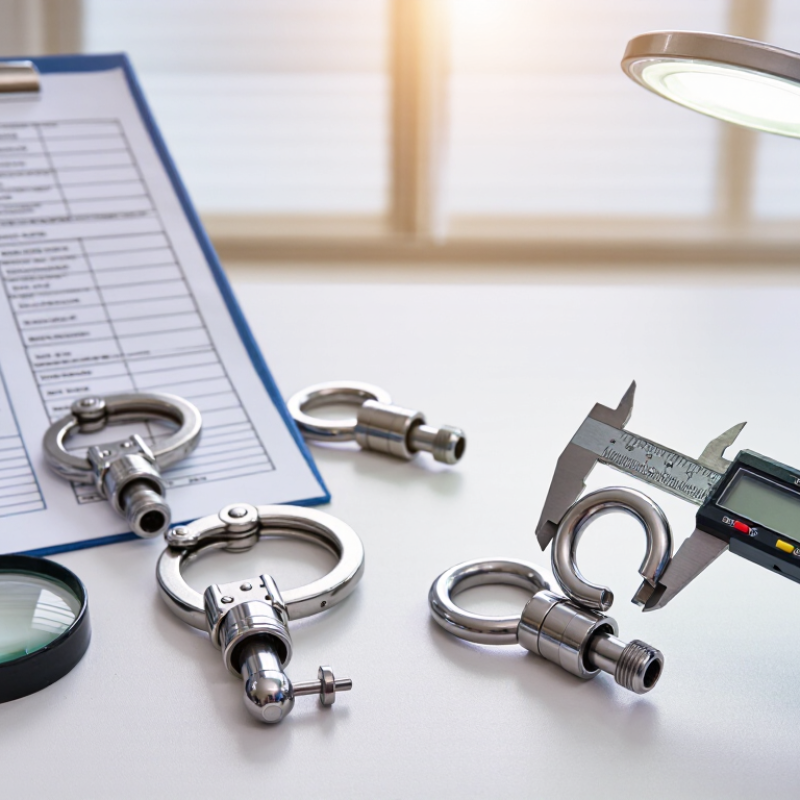
Supplier evaluation also needs practical attention. Review factory experience, quality controls, packaging methods, and response time for technical questions. Request samples before approving a large order. Measure pin diameter, jaw width, thread quality, and surface finish yourself. A digital caliper can reveal problems quickly. So can a careful visual inspection.

Do not trust every specification immediately. Some catalogs use impressive but incomplete figures. Working load limits may depend on loading direction, angles, or assembly conditions. This is where sourcing decisions often become imperfect. Teams may focus on unit cost and overlook testing consistency or replacement availability. A reliable decision balances price, evidence, risk, and long-term performance. The following guide explains how to compare Stainless Steel Shackles with greater confidence across international suppliers.

How to Choose Stainless Steel Shackles for Global Sourcing

Define Stainless Steel Shackle Types and Their Typical Applications

How to Choose Stainless Steel Shackles for Global Sourcing

Stainless steel shackles are not interchangeable. Their shapes support different working conditions and loads. Bow shackles have wide, rounded crowns. They suit multiple connection points, anchor lines, and marine rigging. Dee shackles have narrower bodies. They work well for straight-line connections, such as chain links and lifting accessories. Screw-pin shackles allow quick installation and removal. Safety-pin designs add a locking feature for areas exposed to vibration or movement.

Typical applications should guide the selection. Marine fittings often require strong corrosion resistance, especially near saltwater. Grade 316 stainless steel is commonly considered for these environments. Grade 304 may suit sheltered areas with lower exposure. For lifting work, check the marked working load limit and certification. A polished surface proves little. Never treat appearance as proof of strength. Field checks often reveal mismatched pins, unclear markings, or unsuitable thread sizes. These details can delay installation and create avoidable risks.

Tips: Match the shackle shape to the load direction. Confirm pin diameter, working load limit, material grade, and inspection documents. Ask suppliers for clear dimensional drawings before ordering samples. Test fit the shackle with the actual chain or eye. Small differences matter. Avoid assuming one specification works everywhere. Local standards, packaging rules, and inspection expectations may differ between markets. A reliable sourcing decision needs technical records, not attractive photographs.

Identify Load Ratings, Dimensions, and Required Safety Factors

How to Choose Stainless Steel Shackles for Global Sourcing

A shackle’s working load limit (WLL) must match the full lifting arrangement, not only the shackle size. Calculate the maximum load, including sling angles, impact, and uneven loading. A 60-degree sling angle can increase leg tension to about 1.15 times the load. At 30 degrees, tension reaches 2 times the load. These figures follow common rigging calculations in ASME B30.26 guidance. EN 13889 also uses a minimum design factor of 6 for general-purpose shackles. Never treat WLL as a breaking load.

Measure pin diameter, bow width, inside height, and thread length. Confirm whether the load is vertical, side-loaded, or connected through a narrow eye. Side loading can reduce capacity sharply. Stainless steel also demands careful inspection. Galling may lock the pin before visible damage appears. Salt deposits can hide pitting around the crown and threads. Supplier certificates should identify material grade, WLL, proof-test results, heat treatment, and traceability. Documents matter, but measurements matter too.

Tips: Request dimensional drawings and a batch test report. Check that markings remain readable after handling. Compare the declared WLL with ASME B30.26 or EN 13889 requirements. Do not mix pins from different batches. A small mismatch can create concentrated stress. Field measurements can be imperfect, especially with painted or corroded parts. Recheck them with calibrated tools before approving a global shipment.

Compare Stainless Steel Grades, Finishes, and Corrosion Resistance

How to Choose Stainless Steel Shackles for Global Sourcing

Stainless steel grade strongly affects shackle performance. Grade 304 suits dry equipment, indoor lifting, and mild outdoor conditions. However, coastal air can expose 304 to salt deposits and surface staining. Grade 316 contains molybdenum, which improves resistance to chlorides and marine exposure. Grade 316L is useful when welding matters because its lower carbon content reduces weld-related corrosion risks. For high strength, precipitation-hardened stainless steel may be considered. Yet, its corrosion resistance may not match 316 in every saltwater environment. Strength and corrosion protection must be checked together.

Finish also changes real-world durability. A smooth, polished surface gives salt and dirt fewer places to collect. Electropolishing can further reduce surface roughness and improve cleanability. Passivation removes free iron left after machining, but it cannot repair poor material selection. I have seen bright shackles stain quickly when buyers treated appearance as proof of corrosion resistance. It is not. A duller, properly passivated shackle may perform better.

Check the working load limit, pin fit, thread quality, and material certificates during sourcing. Ask for testing records and clear grade identification. For marine use, inspect crevices around the pin and body after exposure. Rinse and dry the hardware regularly. Even 316 can corrode under trapped salt, low oxygen, or chemical contamination. This detail is easy to miss. Country-specific standards and markings should also be verified before purchase, because supplier documents are not always equally complete.

Evaluate Manufacturing Quality, Certifications, and Supplier Reliability

How to Choose Stainless Steel Shackles for Global Sourcing

Manufacturing quality starts with steel traceability, not a polished surface. Ask for heat numbers, chemical analysis, and mechanical test results for each production batch. EN 13889 or ASME B30.26 references can clarify dimensions, proof loading, and safe working limits. However, a certificate alone proves little. Match the certificate number with the actual shackle markings and inspection records. During sampling, check pin threads, body symmetry, plating consistency, and readable working-load markings. Small burrs often reveal rushed finishing.

Certifications should support a documented quality system. The ISO Survey 2022 recorded 1,265,216 ISO 9001 certificates across 188 countries and economies. That scale shows adoption, not automatic product performance. Request current ISO 9001 certification, calibration records, batch inspection plans, and independent proof-load reports. For critical lifting use, verify whether an accredited third party witnessed testing. Do not accept laboratory documents with unclear scope or expired accreditation.

Supplier reliability needs measurable evidence. Review three years of delivery records, complaint rates, corrective-action reports, and capacity during peak orders. The World Bank Logistics Performance Index 2023 evaluates shipment reliability, customs, infrastructure, and tracking. Use those factors when comparing production locations. Require sealed samples, pre-shipment inspection, and a written replacement process. I have seen buyers trust attractive samples too quickly. That mistake is expensive. A stronger review combines factory evidence, random testing, and honest discussion of production limits.

How to Choose Stainless Steel Shackles for Global Sourcing - Evaluate Manufacturing Quality, Certifications, and Supplier Reliability

Evaluation Dimension Recommended Requirement Technical Benchmark or Acceptance Point Evidence to Request from the Supplier Common Risk Signal Priority
Stainless Steel Grade Use a documented grade suitable for the operating environment and load application. For corrosion-resistant hardware, 316 stainless steel typically contains approximately 16–18% chromium, 10–14% nickel, and 2–3% molybdenum. 304 stainless steel generally has no intentional molybdenum addition and is less resistant to chlorides. Material test report showing the heat number, chemical composition, applicable material specification, and traceability to the finished shackle. The product is advertised only as “stainless steel” without a grade, heat number, or material certificate. High
Intended Application Separate lifting-rated shackles from marine, architectural, rigging, and general fastening hardware. A stainless shackle must not be used for overhead lifting unless it is specifically designed, marked, tested, and supplied with a rated working load limit for that purpose. Application statement, product drawing, working load limit chart, operating instructions, and documented restrictions. Marketing material uses “heavy duty” or “marine grade” as a substitute for a certified working load limit. High
Applicable Standard Select a recognized product standard that matches the intended use. EN 13889 and ISO 2415 address forged steel shackles for general lifting purposes. ASME B30.26 covers rigging hardware used with lifting equipment. The buyer should confirm that the selected standard is applicable to stainless steel and the intended load service. Declaration of conformity, standard edition, product certificate, design basis, and test reports referencing the exact product family. A certificate lists a standard but does not identify the product size, material, design factor, or test method. High
Working Load Limit Specify the required working load limit, load direction, and safety conditions before requesting quotations. Working load limit depends on design, geometry, material condition, pin configuration, and load angle. It must be taken from the supplier’s rated chart; it should never be calculated from outside diameter alone. Stamped or laser-marked WLL, dimensional drawing, proof-load basis, reduction factors for side loading, and user instructions. Only a breaking load is provided, or the supplier gives one WLL for every shackle size and loading direction. High
Design and Geometry Check bow shape, pin diameter, throat opening, internal radius, thread form, and clearance against the mating components. Dimensions should be controlled by an approved drawing. The shackle should prevent unintended pin disengagement and should not create excessive point loading on the connected eye or sling. Controlled 2D drawing, tolerance table, inspection report, gauge records, and approved sample for first-article comparison. Dimensions are listed as nominal only, with no tolerances or revision-controlled drawing. High
Forging and Heat Treatment Prefer controlled forging and documented processing for load-bearing components. Forging should be free from visible laps, cracks, folds, severe die mismatch, and damaging surface defects. Any heat treatment must be defined by the material and product specification. Process flow chart, forging inspection records, heat-treatment chart, furnace calibration records, and nonconformance procedure. The supplier cannot identify the forging route or provides only a generic statement that the part is “forged.” High
Surface Treatment Use a controlled cleaning and passivation process when corrosion performance is important. ASTM A380 provides guidance for cleaning, descaling, and passivation of stainless steel. ASTM A967 covers chemical passivation treatments and verification methods. The selected treatment should match the grade and service environment. Process specification, bath-control records, treatment date, inspection criteria, and passivation test results when specified by the purchase order. “Polished” is claimed as equivalent to passivated, or the supplier cannot provide process controls for iron contamination and chemical treatment. High
Mechanical Testing Require test evidence for the purchased size, configuration, material, and production lot. Where the product is sold for lifting, the supplier should demonstrate the required proof test or other verification required by the applicable standard. Test loads and acceptance criteria must be traceable to the design and WLL. Independent or witnessed test report, test-machine calibration certificate, specimen identification, test date, applied load, result, and authorized signature. A test report has no specimen identification, calibration information, applied load, or connection to the shipped lot. High
Dimensional and Visual Inspection Inspect every production lot before shipment, with critical dimensions defined in advance. Verify pin fit, thread engagement, bow alignment, surface finish, marking legibility, cracks, folds, burrs, sharp edges, and dimensional tolerances against the approved drawing. Incoming or final inspection plan, sampling level, inspection results, calibrated measuring-equipment list, and photographic records for the lot. Inspection is described only as “QC passed,” without measurable criteria or sample size. High
Marking and Traceability Make the product identifiable throughout receiving, storage, and use. Markings should remain legible and, where applicable, identify the manufacturer or source, size or grade, WLL, and relevant standard or product code. Heat or lot traceability should link the part to its records. Marking drawing, traceability procedure, sample photographs, packing-list format, and lot-to-certificate cross-reference. Markings are absent, easily removed, inconsistent with the certificate, or different between samples and mass production. High
Corrosion and Environment Evaluate chloride exposure, temperature, chemicals, immersion time, and cleaning conditions. 316 stainless steel generally performs better than 304 in chloride-bearing environments, but neither grade is immune to pitting or crevice corrosion. Avoid stagnant crevices and obtain application-specific corrosion guidance. Grade-specific corrosion guidance, surface-treatment records, environmental limitations, and any agreed customer qualification test. A supplier guarantees “rust-proof” performance without defining environment, exposure duration, maintenance, or test conditions. High
Quality Management System Prefer a documented quality system with controlled production and corrective actions. ISO 9001 certification can demonstrate a quality-management framework, but it does not by itself prove that the shackle is safe, compliant, or suitable for lifting. Current certificate, certification scope, issuing certification body, audit validity, process controls, calibration records, and corrective-action examples. The certificate scope excludes metal products or has expired, or the supplier treats ISO 9001 as a product-performance certificate. Medium
Certification Validity Verify certificates independently and match them to the exact legal entity and product scope. Check certificate number, issue and expiry dates, scope, standard edition, certification body, factory address, and whether the certificate covers manufacturing rather than only trading or distribution. PDF certificate plus verification through the issuing body’s public database or written confirmation from the certification body. The document contains inconsistent addresses, unverifiable certificate numbers, altered logos, or a scope unrelated to shackles. High
Supplier Production Capability Confirm that critical operations are controlled by the supplier or qualified subcontractors. Assess forging capacity, machining, thread inspection, passivation, marking, testing, storage, and subcontractor management. Production capacity should be compared with the required monthly volume and lead time. Process audit, equipment list, production-flow diagram, subcontractor register, capacity plan, and recent anonymized inspection records. Production is fully outsourced without documented control, or the supplier cannot explain where forging, testing, and passivation occur. High
Sample and First-Article Control Approve a production-representative sample before placing a large order. The sample should match the proposed material, finish, markings, packaging, dimensions, and manufacturing route. Any approved deviation should be documented and signed. Golden sample, first-article inspection report, material certificate, test report, photographs, and signed deviation list. Samples are supplied from a different process or material, and the supplier refuses to confirm that mass production will match them. High
Order and Lot Consistency Define lot size, inspection frequency, change-control rules, and requalification triggers. Require notification before changes to material grade, forging source, heat treatment, surface treatment, tooling, dimensions, or critical subcontractors. Purchase specification, quality agreement, change-notification clause, lot numbering system, and retained-sample policy. The supplier reserves the right to change materials or subcontractors without prior approval. High
Pre-Shipment Inspection Use risk-based third-party or buyer inspection for initial orders and high-consequence applications. Inspection should verify quantity, packaging, markings, dimensions, certificates, material records, surface condition, and agreed tests before release. Inspection checklist, sampling plan, inspection report, nonconformance photographs, and shipment-release authorization. The supplier ships before inspection or treats a packing-list check as a complete product-quality inspection. Medium
Packaging and Export Handling Protect machined and passivated surfaces during international transport and storage. Use clean, dry, non-contaminating packaging. Prevent contact with carbon-steel debris, saltwater, condensation, and abrasive materials that can damage or contaminate stainless surfaces. Packaging specification, carton and pallet photographs, moisture-control method, labeling format, and container-loading procedure. Stainless parts are mixed with carbon-steel hardware or packed in wet, dirty, or abrasive materials. Medium
Commercial Reliability Evaluate delivery, communication, documentation, and corrective-action performance using measurable records. Track on-time delivery, response time, defect rate, certificate accuracy, claim closure time, and repeat-order consistency over several shipments. Redacted order history, delivery KPI summary, customer-reference process, complaint log, corrective-action reports, and business-continuity plan. Promises are made verbally, delivery dates change repeatedly, or complaints are closed without root-cause analysis and preventive action. Medium
Procurement note: A stainless steel shackle should be approved only after the material, intended application, working load limit, applicable standard, test evidence, traceability, and production controls have been verified for the exact product and order lot.

Plan Global Sourcing, Inspection, Shipping, and Compliance Requirements

How to Choose Stainless Steel Shackles for Global Sourcing

Global sourcing starts with the working environment, not the lowest quotation. Marine saltwater, chemical exposure, and outdoor storage can accelerate corrosion. Select the stainless grade, shackle type, pin design, and working load limit together. ISO 2415:2022 provides requirements for forged shackles used in lifting applications. However, a standard reference does not replace destination-country requirements. Ask suppliers for material certificates, heat numbers, dimensional drawings, and proof-test records. Verify that markings remain readable after polishing and passivation.

Inspection should include thread condition, pin fit, body cracks, deformation, surface pits, and load markings. Use calibrated gauges and retain photographs for each batch. A third-party inspection can compare samples with approved drawings. Do not confuse breaking load with working load limit. That mistake is costly. Sampling plans should reflect order value and risk, although a small sample can miss a hidden defect. Recheck the plan after the first shipment.

Shipping needs equal attention. UNCTAD’s Review of Maritime Transport reports that about 80% of global merchandise trade by volume moves by sea. Pack shackles in dry, sealed cartons with separators to prevent metal contact and scratches. Add desiccants when transit crosses humid routes. Confirm gross weight, carton dimensions, country-of-origin documents, and the correct customs classification before booking. The World Bank’s 2023 Logistics Performance Index shows uneven customs and delivery performance across markets, so buffer time matters. Compliance files should include invoices, packing lists, test reports, inspection records, and destination-language instructions. A missing document can delay compliant cargo.

Chat Online
Chat Online
Leave Your Message inputting...
Thank you for your attention. Please kindly describe your question first, or please send your inquiry to our email sale@pcbledmodule.com, and we will reply to you ASAP. Welcome, what can I help you?
Sign in with: