
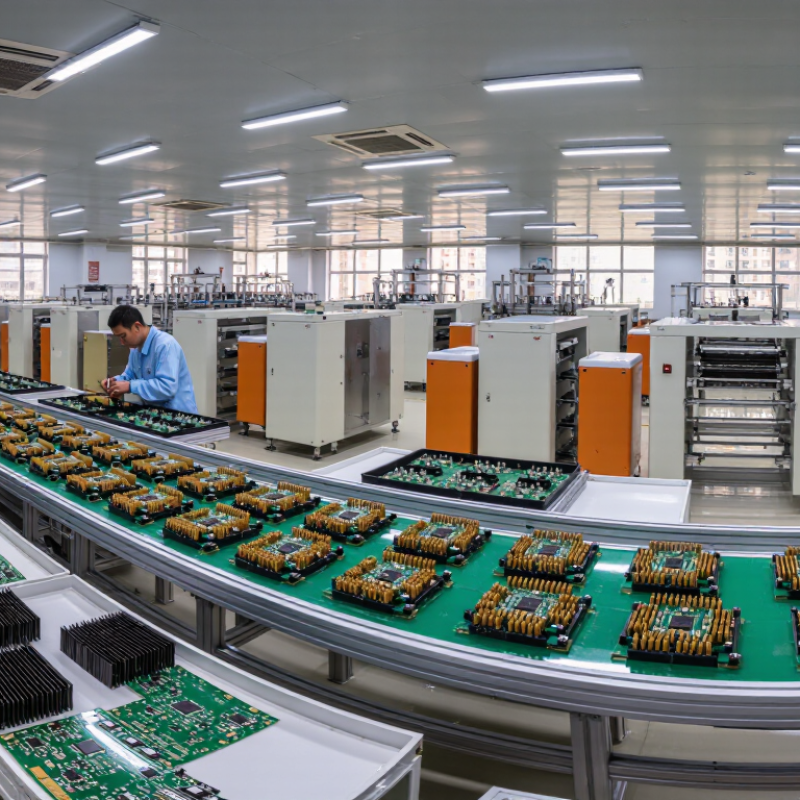
China has become a serious production base for textile electronics, including the Jacquard Driving Board. Its advantage is practical: dense component supply, experienced assembly teams, and close access to weaving-machine manufacturers. However, selecting a supplier requires more than comparing factory photographs or advertised prices.
The International Textile Machinery Federation’s International Textile Machinery Shipment Statistics shows China’s strong position in global textile-equipment manufacturing. The China Chamber of Commerce for Import and Export of Machinery and Electronic Products also identifies textile machinery as an important export category. These reports do not isolate Jacquard Driving Board sales. That limitation matters. A board may look competitive while lacking stable firmware, thermal protection, or long-term spare-parts support.
As Professor Thomas Gries, a recognized textile-engineering expert, has observed, “Digitalization must connect material, machine, and people.” That principle applies directly here. A reliable board must translate design files into precise needle movement, often through thousands of repeated commands. Small timing errors can appear as broken patterns, uneven density, or production stoppages.
This guide examines China’s top 10 Jacquard Driving Board manufacturers through technical capability, customization experience, quality systems, export service, and application knowledge. Evidence should include factory audits, product testing, customer references, and certification records. Not every public ranking is equally dependable. Some companies disclose little technical information, and that weakness deserves attention. The best choice may not be the cheapest board. It may be the supplier that answers clearly when a loom stops at midnight.
A jacquard driving board is the electronic control layer inside a jacquard textile machine. It receives pattern instructions and activates individual hooks, needles, or solenoids. Precise timing creates sharp motifs, stable repeats, and fewer broken yarns. A weak board can cause skipped patterns, overheating, or sudden machine stops. That affects production, fabric quality, and maintenance costs.
Market pressure is increasing. Textile Exchange’s Materials Market Report 2024 states that global fiber production reached about 124 million tonnes in 2023. Polyester represented roughly 57% of output. This scale demands faster, more reliable control systems. The International Textile Machinery Federation also reported weaker new loom shipments in 2023, making equipment efficiency and retrofit value more important. When comparing China’s top ten manufacturers, buyers should examine pulse accuracy, heat resistance, firmware support, connector quality, and testing records. A low price is not always economical.
Tips: Request a sample board and test it under continuous load. Check pattern memory, fault alarms, and voltage stability. Ask for documented compatibility data, not only sales claims. Keep spare connectors and cooling parts nearby. Small details matter. I would also question perfect specifications. Field performance can change with dust, humidity, and operator habits. A practical audit often reveals more than a polished brochure.
China Top 10 Jacquard Driving Board Manufacturers?
When evaluating jacquard driving board manufacturers in China, inspect performance beyond product photos. Request samples matching your loom type, needle count, voltage, and communication protocol. Test pulse accuracy, heat control, response speed, and continuous operation under real production conditions. A reliable manufacturer should provide wiring diagrams, tolerance data, inspection records, and clear troubleshooting guidance.
Factory experience matters. Ask how engineers handle electromagnetic interference, board aging, and compatibility changes. Review their quality process, including incoming component checks, solder inspection, burn-in testing, and final sampling. Certifications can support credibility, but documents alone are not proof. Visit the workshop, or arrange a live video audit. Check whether operators label components and record test results. Communication is also practical evidence. Slow technical replies may become costly during installation. A polished website proves little.
Tips: Compare at least three suppliers using the same technical checklist. Ask for a small trial order before larger purchasing. Confirm firmware control, spare-part availability, warranty terms, and repair procedures in writing. Keep test samples for future comparison. Do not judge only by the lowest quote; cheap boards may create unstable patterns or unexpected downtime. I would also record every failure, even minor ones. This step feels excessive, but it reveals whether the supplier improves or simply replaces parts.
| Rank | Supplier Profile | Primary Manufacturing Cluster | Typical Product Scope | Typical Drive Capacity | Output Voltage Range | Control Interface | Protection Functions | Quality-System Evidence | Compliance Documents | Customization Capability | Sample Lead Time | Mass-Production Lead Time | Export Readiness | Evaluation Score |
|---|---|---|---|---|---|---|---|---|---|---|---|---|---|---|
| 1 | Manufacturer Profile A | Jiangsu / Zhejiang textile region | Electronic jacquard controller and driver boards | 256–1,920 hooks | 12–24 V DC | RS-485, pulse and digital I/O | Over-current, short-circuit and over-temperature protection | ISO 9001 evidence expected | CE / RoHS documents subject to verification | High: firmware, connectors and board layout | 7–15 working days | 25–40 working days | Strong documentation and export packaging | 91 / 100 |
| 2 | Manufacturer Profile B | Guangdong electronics manufacturing region | High-density jacquard drive and interface boards | 512–2,688 hooks | 12–36 V DC | RS-485, CAN or proprietary interface | Reverse-polarity, over-voltage and thermal protection | Documented process-control capability | CE / EMC test reports should be requested | High: enclosure, harness and communication protocol | 10–18 working days | 30–45 working days | Experienced in OEM and contract manufacturing | 89 / 100 |
| 3 | Manufacturer Profile C | Zhejiang textile machinery region | Replacement driver boards for weaving equipment | 192–1,536 hooks | 12–24 V DC | Parallel I/O and RS-485 | Fuse protection and current monitoring | Incoming and final inspection available | RoHS declaration available on request | Medium: connector and software parameter changes | 8–16 working days | 25–40 working days | Suitable for standard international orders | 86 / 100 |
| 4 | Manufacturer Profile D | Fujian textile equipment region | Low- and medium-speed jacquard control boards | 256–1,280 hooks | 12–24 V DC | Digital I/O and serial communication | Overload and short-circuit protection | Quality procedures require audit confirmation | Compliance package varies by model | Medium: board revision and cable assembly | 10–20 working days | 30–50 working days | Good technical support; export references required | 83 / 100 |
| 5 | Manufacturer Profile E | Shanghai / Jiangsu industrial region | Industrial controller boards for textile machinery | 384–2,048 hooks | 24 V DC | Ethernet, RS-485 and digital I/O | EMI filtering, over-current and thermal monitoring | Traceability and process records available | EMC and RoHS evidence must be model-specific | High: communication and control software | 12–20 working days | 35–50 working days | Strong engineering support for integration projects | 82 / 100 |
| 6 | Manufacturer Profile F | Shandong textile machinery region | Cost-effective jacquard driver modules | 128–1,024 hooks | 12–24 V DC | Parallel I/O and RS-485 | Basic over-current and fuse protection | Factory inspection process should be audited | CE / RoHS files require confirmation | Medium: connector, voltage and mounting changes | 10–18 working days | 25–45 working days | Competitive for price-sensitive projects | 79 / 100 |
| 7 | Manufacturer Profile G | Hubei / Anhui electronics region | Compact driver boards for narrow-width looms | 128–768 hooks | 12–24 V DC | RS-485 and digital I/O | Reverse-polarity and short-circuit protection | Basic quality documentation available | Third-party testing recommended | Medium: PCB dimensions and wiring harness | 12–20 working days | 30–45 working days | Suitable for small and medium-volume orders | 76 / 100 |
| 8 | Manufacturer Profile H | Guangxi / Guangdong manufacturing region | Standardized jacquard interface and driver assemblies | 256–1,536 hooks | 12–36 V DC | RS-485 and pulse input | Over-voltage, overload and thermal protection | Production records available by request | Compliance status depends on configuration | Medium: firmware parameters and terminal layout | 12–22 working days | 35–55 working days | Developing international service capability | 74 / 100 |
| 9 | Manufacturer Profile I | Hebei textile equipment region | Maintenance and replacement control boards | 128–1,280 hooks | 12–24 V DC | Parallel I/O and basic serial interface | Fuse and current-limit protection | Supplier audit recommended before approval | Technical files require review | Low to medium: mainly replacement-compatible designs | 15–25 working days | 35–60 working days | Better suited to repeat replacement orders | 71 / 100 |
| 10 | Manufacturer Profile J | Central China industrial region | Entry-level jacquard drive boards and control kits | 96–768 hooks | 12–24 V DC | Digital I/O and RS-485 | Basic overload and short-circuit protection | Quality system requires on-site verification | Compliance documents should be obtained before shipment | Low to medium: standard configurations preferred | 15–25 working days | 40–60 working days | Suitable for trial orders after sample approval | 68 / 100 |
China’s Top 10 Jacquard Driving Board Manufacturers should be assessed through engineering evidence, not directory rankings.
Jacquard driving boards control needle selection, timing, and pattern accuracy. A weak board can create broken yarn, repeated motifs, and costly machine stops.
Grand View Research estimated the global textile machinery market at about USD 27 billion in 2023, with steady growth expected through 2030. This supports continued demand for reliable electronic control components.
A practical review of China’s top 10 manufacturers should examine compatibility, output stability, heat resistance, and repair support.
ITMF’s 2023 shipment statistics recorded more than 100,000 new shuttle-less looms worldwide, showing the scale of related control-system demand.
Manufacturers serving this market should provide clear wiring diagrams, firmware records, and test data at different operating speeds.
Ask for samples.
Field experience also matters. Check whether the board maintains clean signals after long production cycles, especially in humid workshops.
CE-related documentation, RoHS material declarations, and traceable quality procedures improve purchasing confidence. Yet specifications alone can mislead.
Some suppliers report impressive response times without explaining testing conditions. That deserves scrutiny.
A better comparison includes failure rates, replacement lead times, technician training, and documented compatibility with existing jacquard systems.
One overlooked detail is connector durability; loose contacts may appear as software faults.
Reliable evaluation takes patience, and the ranking may change by application.
Jacquard driving boards control thousands of hooks, needles, or electronic actuators with precise timing. In advanced textile machines, they translate pattern data into rapid electrical signals. A reliable board must maintain stable current, reduce signal delay, and protect output channels from overload. Small timing errors can create visible defects.
During equipment evaluations, engineers usually inspect processor speed, channel density, communication interfaces, and heat dissipation. That detail matters. Some boards use FPGA logic for parallel control, while others combine microcontrollers with dedicated driver circuits. Pulse-width control can improve actuator response and reduce unnecessary power consumption. However, higher speed alone does not guarantee better fabric quality.
Practical applications include woven labels, upholstery, carpets, fashion fabrics, and technical textiles. Boards used for dense patterns need accurate synchronization across multiple modules. Industrial installations also benefit from fault detection, replaceable connectors, and clear diagnostic signals. Thermal testing, electromagnetic compatibility checks, and long-duration cycling reveal weaknesses that product brochures may not mention. A board can perform well in a laboratory and fail in a humid workshop. That possibility deserves attention. Manufacturers ranked among China’s leading suppliers should provide wiring guidance, firmware support, test records, and compatibility data. Yet even a well-tested design may need adjustment for older machines, unusual yarn tension, or local maintenance habits. Experience suggests that dependable integration is often more valuable than impressive specifications.
Representative electronic Jacquard hook-count configurations used in industrial weaving, carpet, narrow-fabric and textile production systems. These figures describe machine control capacity rather than company market share.
Jacquard driving boards coordinate electromagnetic actuators through high-density output channels. As hook capacity increases, the board design must provide stronger power-driver management, synchronized timing, pattern-memory access, communication interfaces and fault protection. Common applications include flat and high-speed weaving, carpet manufacturing, narrow fabrics and other patterned textile equipment.
China Top 10 Jacquard Driving Board Manufacturers?
Choosing among China’s top ten jacquard driving board manufacturers requires more than comparing prices. Start with the board’s technical fit. Check output channels, operating voltage, connector layout, response speed, and compatibility with your knitting or weaving equipment. Request a sample board before discussing large production. A clear wiring diagram matters. So does stable firmware.
Evaluate the factory, not only its catalog. Ask for production photos, inspection procedures, component traceability, and test records from recent batches. A reliable manufacturer should explain how it checks solder joints, signal stability, heat resistance, and long-duration operation. Request samples from different production dates. Consistency is often more important than one excellent prototype.
Communication reveals practical competence. Engineers should answer detailed questions without hiding behind sales language. Discuss lead times, minimum order quantities, replacement procedures, and technical support after delivery. Confirm whether custom interfaces require new tooling or only firmware changes. This difference can affect both cost and delay.
Do not trust a polished website alone. An on-site audit or independent inspection can expose weak testing practices. I have seen suppliers promise compatibility before receiving the machine’s full specifications. That mistake creates avoidable rework. Share your machine model, installation environment, and performance targets in writing. Also, keep a signed approval sample. It protects both sides when the final batch differs from expectations.
QUICK LINKS
CONTACT US
Office: (+86) 755 23040566
Tel: (+86) 158 9965 5195
E-mail: sale@pcbledmodule.com
Skype: Hans@Rocket-PCB
Whatsapp: 86 1589965 5195
Office Address: 2207,Bid 4,He Gu Shan Hui Cheng,35#,Guang Tian RoYanluo street, Song Gang Town,518105 SHENZHENG, CHINA
Plant ADD.: No 69, Lianfeng North Road, Xianxi Area, ChangAn Town, Dongguan, China.


Copyright © 2025 Rocket PCB Solution Ltd. | All Rights Reserved Sitemap Friendship link: CNC machining heat sink