
Top 10 Electronic Board Features You Need to Know?
In the rapidly evolving tech landscape, understanding the essential features of an Electronic Board is crucial. A recent report by ResearchAndMarkets indicates that the global market for electronic boards is projected to grow significantly, potentially reaching over $10 billion by 2025. This growth reflects the increasing demand for smarter devices and advanced technology in various applications.
Electronic Boards serve as the backbone of today's electronics. They facilitate complex functions in everything from consumer electronics to industrial machinery. In fact, a study by TechTarget highlights that nearly 70% of electronic failures stem from PCB (Printed Circuit Board) issues. Thus, recognizing key features is vital to ensure reliability and optimal performance in design.
However, many companies overlook critical aspects during the design process. Incomplete knowledge can lead to costly errors. For every new product, the integration of innovative features should not overlook the basics. Staying updated means not only understanding current trends, but also recognizing potential pitfalls in design and manufacturing. As we dive into the top ten features of Electronic Boards, it is essential to balance innovation with practicality.
Key Components of Electronic Boards and Their Functions
When diving into electronic boards, understanding key components is essential. At the heart of these boards, you'll find the microcontroller. It processes all the information and controls the entire system. Keep in mind, choosing the right microcontroller is crucial for performance.
Next, the power supply unit (PSU) provides necessary energy. A stable PSU ensures the board operates smoothly. An unstable power source can lead to errors or complete failure. Always verify your power connections.
Another important feature is communication interfaces. These include USB, Bluetooth, or Wi-Fi. They help the board interact with other devices. Selecting the right interface can affect your project’s capabilities.
**Tip:** Test different communication methods to see which suits your project best. Some interfaces may work better under specific conditions.
Furthermore, sensors are vital for many applications. They collect data and give context to your board's operations. Depending on the project, the choice of sensors can vary significantly.
**Tip:** Consider the environment where your board will function. Sensors that thrive in one condition might fail in another.
Lastly, don't overlook the PCB design. A poorly designed board can hinder performance. Pay close attention to traces, layout, and component placement. Always review your design for potential mistakes. Reflections on your choices can lead to better results.
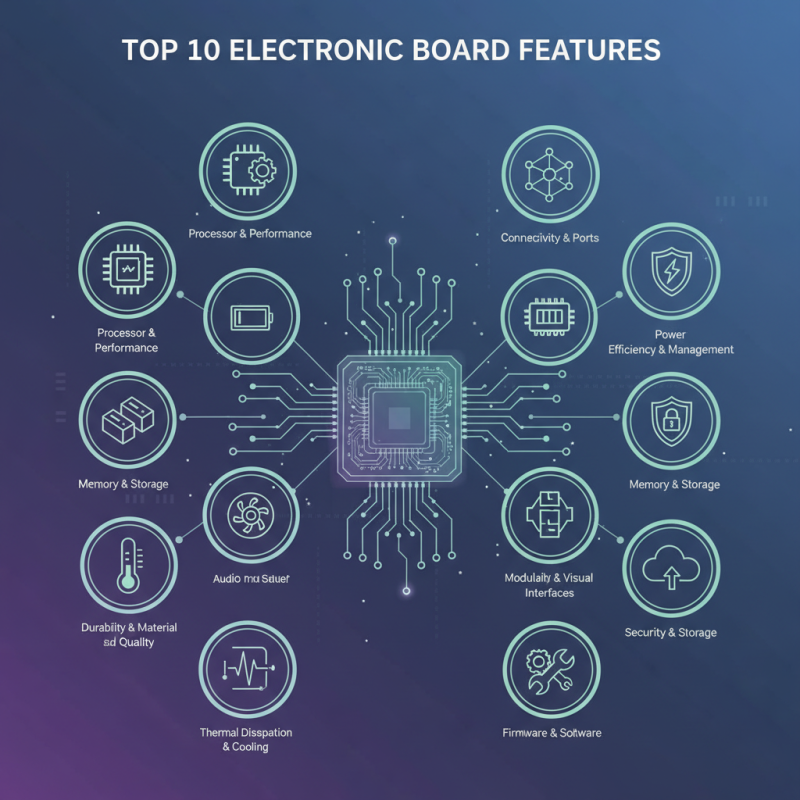
Top 10 Electronic Board Features You Need to Know
This chart displays the importance level of key components found on electronic boards, rated on a scale from 1 to 10. Understanding these features can greatly enhance your knowledge of electronics.
Essential Connectivity Options for Optimal Performance
When selecting electronic boards, connectivity features are paramount. Modern applications demand reliable and fast communication between devices. A recent industry report highlighted that 85% of system failures stem from inadequate connectivity options. To achieve optimal performance, it's essential to focus on various connectivity types.
Wired connections, such as USB and Ethernet, offer stability and speed. They are less prone to interference compared to wireless options. Yet, wireless technologies like Wi-Fi and Bluetooth are essential for flexibility. They allow devices to communicate over distances. However, they come with potential latency issues that can affect performance. A study indicated that 65% of users faced connectivity problems with wireless setups.
Moreover, the inclusion of multiple ports enhances versatility. Boards with expandability options cater to diverse requirements, making them future-proof. Industry research shows a growing demand for boards with integrated IoT capabilities. These capabilities improve data collection and sharing. However, boards can quickly become obsolete. A frequent oversight is not assessing the long-term compatibility of connectivity options. This leads to costly upgrades down the line. Prioritizing the right connectivity choices is vital for any project’s success.
User-Friendly Interfaces: Enhancing Interaction with Electronic Boards
User-friendly interfaces play a crucial role in enhancing interaction with electronic boards. A well-designed interface can make a significant difference in user experience. When users feel comfortable, they can focus on creativity and collaboration. Interfaces that are intuitive and visually appealing foster engagement. For instance, touch-responsive elements create a seamless interaction, allowing users to navigate easily.
Tips for creating effective interfaces include minimizing clutter. A clear layout helps users find what they need quickly. Incorporating recognizable icons can guide users intuitively. Also, consider varying color contrasts. This can make options stand out, but too much color can overwhelm. Striking the right balance is vital.
Users may sometimes feel lost with complex features. Regular feedback helps improve interfaces. Engage users to understand their needs better. A user-centered approach can reveal areas for improvement. Reflection on user experiences can lead to significant enhancements. It’s essential to listen and adapt based on those interactions.
Power Management Features for Extended Lifespan
Power management is crucial for any electronic board. A well-designed power management system enhances performance and lifespan. It regulates voltage and current effectively, preventing overheating and damage. Many designers overlook this aspect. This can lead to failures and costly repairs.
Efficient power management features include sleep modes and dynamic voltage scaling. These features reduce power consumption during idle times. They adjust power delivery based on performance needs. Even minor improvements in power efficiency can extend the board's lifespan significantly. Users often forget that longevity is more important than short-term performance gains.
Thermal management is another vital aspect. Overheating can lead to significant failures, wasting resources. Implementing heat sinks and thermal monitoring systems can mitigate risks. Regular assessments of thermal performance can help in detecting issues early. Designers should prioritize these elements to avoid future complications. Balancing performance with power efficiency requires thoughtful consideration. It's not about making everything faster; it's about making it last.