What Is the Top Smart Door Lock for Global Buyers?
Choosing the top Smart Door Lock for global buyers requires more than comparing prices and glossy features. The right choice must match the door, climate, network, and household habits. A lock that performs well in a dry apartment may struggle beside a humid coastal entrance. Real-world testing matters. Battery life, fingerprint response, keypad visibility, and manual override should be examined together. Small details often decide daily reliability.
This guide evaluates Smart Door Lock options through practical and professional criteria. These include security design, encrypted communication, mechanical strength, installation requirements, and software support. Buyers should also check recognized product testing, warranty terms, replacement parts, and regional compatibility. Some models depend heavily on cloud services, while others continue working locally during internet failures. That difference can matter at midnight.
No single lock serves every market. A European mortise system may not fit an American deadbolt opening. Regional door sizes, power standards, app availability, and privacy expectations can change the buying decision. I would not treat high review scores as final proof. Reviews may ignore long-term battery drain or difficult customer support. My assessment therefore combines manufacturer information, user experience, security practices, and realistic installation concerns. Still, any comparison has limits. Field conditions vary, and even careful testing cannot predict every home. The strongest recommendation is the one that remains understandable, serviceable, and dependable after installation—not merely impressive during a product demonstration.
Define Smart Door Locks Through ANSI/BHMA Grade 1 and EN 14846 Standards
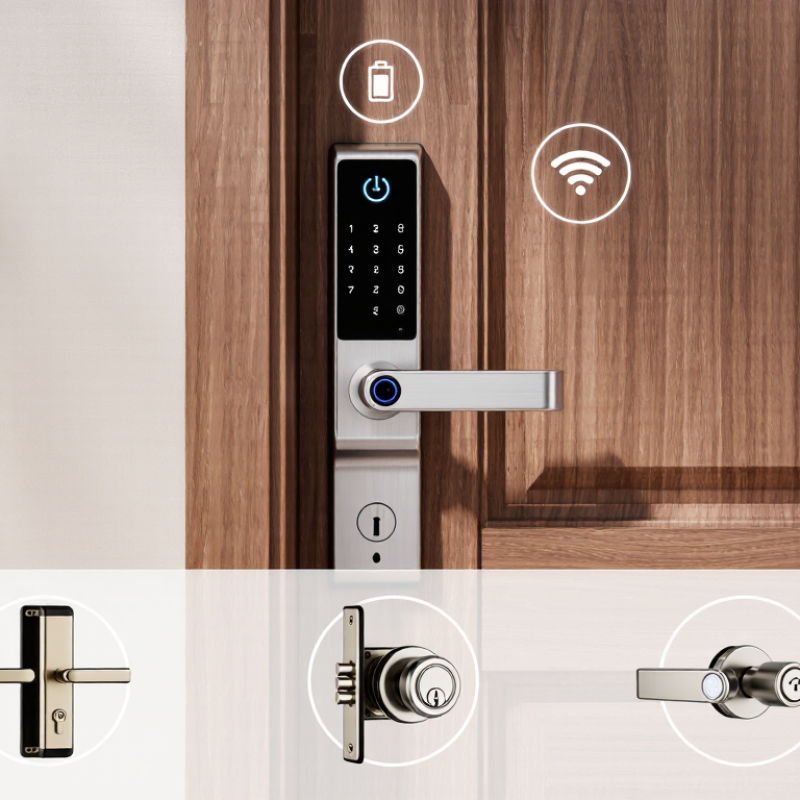
For global buyers, a smart door lock should mean more than an app, keypad, or fingerprint reader. ANSI/BHMA Grade 1 provides a useful performance reference, especially for demanding residential and commercial doors. It evaluates strength, endurance, operation, and resistance to forced use through controlled testing. The Grade 1 label does not prove every electronic feature works securely. It also does not guarantee compatibility with every door.
EN 14846 focuses on electromechanically operated locks and striking plates. Its testing considers locking action, durability, safety, and performance under defined conditions. These requirements help buyers compare products across European supply chains. However, the standards are not identical, so Grade 1 should not be treated as an automatic equivalent to EN 14846 compliance. That assumption can create expensive mistakes.
Look for an independent test report, certification scope, and exact model number. Ask whether the tested configuration includes the motor, cylinder, strike, keypad, and emergency function. Check door thickness, latch alignment, fire-door requirements, and manual egress before installation. A lock may pass laboratory tests yet fail on a warped door.
Real experience matters here. Poor alignment can drain batteries and weaken locking performance. Wireless convenience is not a security grade. Neither is a polished interface. Smart locks also need software maintenance, access-log protection, and a reliable fallback method. These concerns deserve more attention in many buying guides. Standards establish a strong foundation, but installation quality and honest documentation still decide daily reliability.
Evaluate Security With AES-128 Encryption, TLS, and Two-Factor Authentication
Choosing a smart door lock starts with its data path, not its touchscreen or metal finish. A strong model should use AES-128 encryption to protect stored credentials and access records. AES-128 remains widely trusted when implemented correctly. Implementation matters more than the label. Look for documented key management, secure firmware, and clear update policies. Without these details, security claims are difficult to verify.
TLS protects information moving between the lock, mobile app, and cloud service. Check that the connection uses a current TLS version and rejects weak certificates. During a practical test, observe the app while sending a lock command over public Wi-Fi. Sensitive details should not appear in plain text.
Two-factor authentication adds another barrier against account takeover. Use a password plus a time-based code or approved security key. Convenience may suffer slightly. That trade-off is usually reasonable for an entry point.
Security also depends on recovery controls, battery behavior, and physical installation. A lost phone should be removable from the account without disabling every user. Review access logs for unfamiliar times, failed attempts, and repeated connection errors. I initially focused too much on encryption strength and overlooked update reliability. That was a useful correction. AES-128, TLS, and two-factor authentication reduce common risks, but they cannot fix reused passwords or neglected firmware. Security is never finished.
Measure Reliability by Battery Life, IP65 Rating, and Emergency Power Support
What Is the Top Smart Door Lock for Global Buyers?
A reliable smart door lock starts with honest battery performance. Look for a stated battery life based on daily use, not laboratory standby mode. Frequent unlocking, cold weather, and weak wireless signals can reduce runtime. A model lasting six to twelve months may suit many homes, but battery estimates are never promises. Low-battery alerts should appear early through the keypad, app, or both. Test the alert before trusting it.
Tips: Check the battery compartment monthly. Keep spare batteries nearby. Do not wait for silence.
An IP65 rating adds useful protection for entrances exposed to dust and rain. The first number means full dust protection. The second indicates resistance to water jets, not submersion. Positioning still matters. A covered doorway can reduce moisture around the keypad and internal seals. Emergency power support is equally important. A front contact point for temporary external power can restore access when batteries fail. Confirm its power method and location before installation. Some designs make this port difficult to find at night.
Global buyers should also inspect temperature limits, language options, installation measurements, and local support. A lock can have excellent specifications yet fit poorly on an older door. That is an easy mistake. Reliability comes from the complete system: strong hardware, predictable battery behavior, weather resistance, and a practical recovery option.
What Is the Top Smart Door Lock for Global Buyers? — Measure Reliability by Battery Life, IP65 Rating, and Emergency Power Support
Anonymous reference configurations ranked by practical reliability factors
| Reference Configuration | Typical Battery Setup | Typical Battery Life | IP Rating | Emergency Power Support | Connectivity Profile | Reliability Score | Best For |
| 1. Balanced Global Benchmark | 4 × AA alkaline batteries | 6–12 months under normal use | IP65
Dust-tight; protected against water jets | USB-C or 9V external contact points | Bluetooth with optional low-power wireless bridge | 9.2 / 10 | Most international residential installations |
| 2. Longest Battery Priority | 4 × lithium AA batteries | 9–18 months under normal use | IP65
Suitable for exposed residential doors | USB-C or 9V external contact points | Bluetooth or Zigbee; limited always-on Wi-Fi load | 9.0 / 10 | Remote properties and low-maintenance homes |
| 3. High-Usage Access Profile | 4 × AA alkaline batteries | 4–8 months with frequent daily use | IP65
Resistant to dust and low-pressure water jets | USB-C emergency input | Wi-Fi enabled with cloud access | 8.6 / 10 | Busy households and short-term rental properties |
| 4. Rechargeable Convenience Profile | Built-in rechargeable lithium-ion battery | 2–6 months per charge, depending on usage | IP65
Requires correct installation and sealed charging port | USB-C emergency charging | Wi-Fi or Bluetooth with app control | 8.1 / 10 | Users who prefer rechargeable systems |
| 5. Basic Indoor Reliability Profile | 4 × AA alkaline batteries | 6–12 months under moderate use | IP54
Dust-limited protection and water splashes | 9V external contact points | Bluetooth or keypad-only operation | 7.4 / 10 | Covered entrances and indoor applications |
Evaluation notes: Battery-life figures are typical engineering reference ranges and vary with unlocking frequency, wireless communication, temperature, battery quality, and motor load. An IP65 enclosure is dust-tight and protected against water jets from any direction, but it is not designed for immersion. For international buyers, an emergency power input, low-battery warning, manual key override, and locally replaceable batteries are strong reliability indicators.
Select the Top Lock by Regional Fit, Certifications, Privacy, and Total Cost
What Is the Top Smart Door Lock for Global Buyers?
The best smart lock depends on regional fit, not advertising claims. Check the door first. Measure its thickness, backset, cylinder type, and opening direction. A lock made for a North American deadbolt may not fit a European multipoint door. Humid coastal homes also need stronger corrosion resistance. Local installation support matters when the keyway sits behind a narrow metal plate.
Certifications deserve careful attention. Look for relevant mechanical standards, such as ANSI/BHMA grades or EN 14846, depending on the market. Radio devices may also require regional approvals, including FCC, CE, or UKCA requirements. Security testing should reference recognized guidance, such as ETSI EN 303 645. These marks do not guarantee perfect protection. They show tested requirements.
Privacy is equally practical. The 2024 Verizon Data Breach Investigations Report found human involvement in 68% of breaches. Use unique passwords, multi-factor authentication, and local access logs when available. IBM’s 2024 Cost of a Data Breach Report placed the global average breach cost at 4.88 million dollars. That figure concerns organizations, but the lesson remains relevant. Avoid unnecessary cloud sharing. A lock costing 120 dollars may require a bridge, batteries, installation, and monthly access fees. Over three years, the total may exceed 300 dollars. I would not assume the cheapest option wins. Some buyers still underestimate service interruptions and battery warnings.
What Is the Top Smart Door Lock for Global Buyers?
Regional-fit benchmark based on certification pathways, privacy expectations, door compatibility, and indicative three-year ownership cost.
The index uses a 0–100 screening scale: higher scores indicate stronger overall suitability for the region. Certification fit considers commonly used regional pathways such as ANSI/BHMA in North America, EN standards in Europe, UK product-security requirements, and Australian/New Zealand electrical and building requirements. Privacy fit reflects the importance of data minimization, secure authentication, local privacy compliance, and optional cloud independence. Total-cost values are indicative USD estimates covering hardware, installation, batteries, and three years of routine ownership.