
English


Choosing the best Cnc Equipment from China requires more than comparing prices. Buyers must examine accuracy, spindle performance, control systems, service coverage, and long-term operating costs. A machine may look impressive in a showroom, yet perform poorly beside a dusty production line. The real test appears during daily cutting, tool changes, calibration, and maintenance.
Industry data shows why this decision matters. Grand View Research valued the global CNC machine market at approximately USD 88.5 billion in 2023 and forecasts strong growth through 2030. The China Machine Tool Industry Association has also reported continuing investment in automation, intelligent manufacturing, and high-end machine tools. These figures suggest opportunity, but they do not prove that every Chinese supplier offers equal quality. That assumption needs questioning.
Dr. Yoram Koren, a respected manufacturing systems researcher and author, described CNC technology as “the backbone of modern manufacturing.” His view highlights an important point: equipment should support the entire production system, not only deliver fast cutting. The best Cnc Equipment may include a rigid five-axis machining center, a reliable CNC controller, measurable positioning accuracy, and responsive technical support. Sometimes, a simpler three-axis machine is the wiser choice. It depends on materials, tolerances, batch sizes, operator skills, and available maintenance resources. Buyers should request test cuts, inspection reports, warranty terms, and customer references before signing. Marketing claims are not enough. A careful comparison may feel slower, but it often prevents expensive downtime later.
What Is the Best CNC Equipment from China?
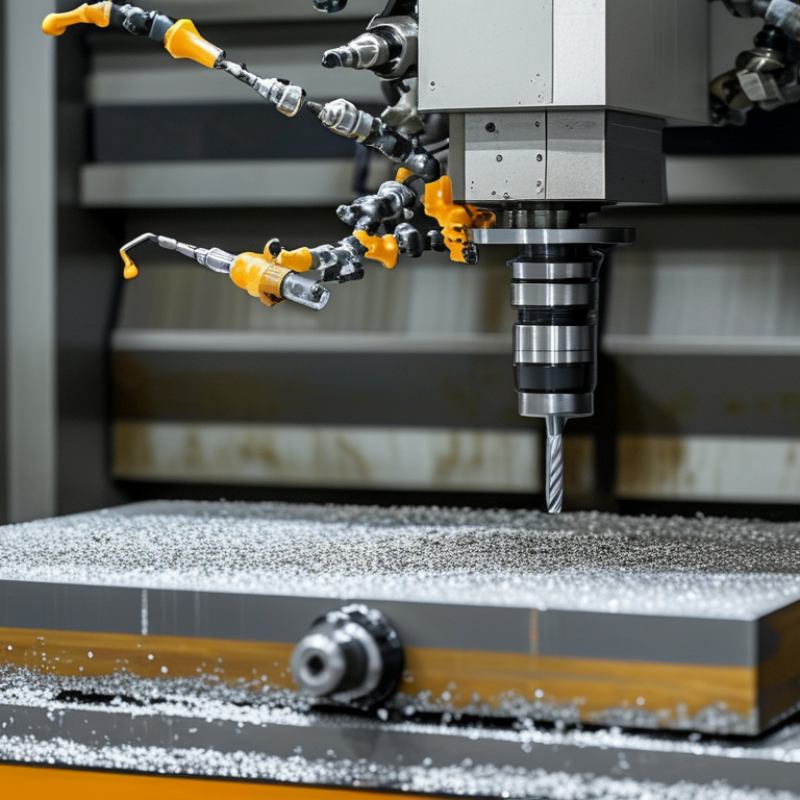
Chinese CNC equipment should be defined by capability, not price alone. A three-axis machine suits plates, brackets, and straightforward molds. Four-axis equipment adds rotational access for indexed features. Five-axis systems reduce repositioning and improve complex-surface accuracy. However, more axes also increase programming, calibration, and maintenance demands. Three axes suffice for many workshops.
Controls matter as much as mechanics. Check interpolation capacity, servo feedback, tool management, simulation, and G-code compatibility. A responsive controller can shorten setup time and reduce operator mistakes. The machine’s machining range must match real workpieces, not imagined future orders. Compare X, Y, and Z travel, table load, spindle speed, taper, and automatic tool capacity. According to Grand View Research, the global CNC machine market was valued at about USD 88.5 billion in 2023. China’s scale is also significant: the International Federation of Robotics reported 276,288 industrial robot installations there in 2023. These figures suggest strong manufacturing depth, but they do not prove every machine offers equal quality.
Tips: Request a cutting test using your material and tool geometry. Measure surface finish, dimensional drift, chip evacuation, and cycle time. Ask for calibration records and controller support terms. A larger work envelope may reduce rigidity. I once underestimated fixture space; the machine technically fit, but production became awkward. Leave room for maintenance, coolant access, and operator movement. Accuracy claims need evidence.
QUICK LINKS
CONTACT US
Office: (+86) 755 23040566
Tel: (+86) 158 9965 5195
E-mail: sale@pcbledmodule.com
Skype: Hans@Rocket-PCB
Whatsapp: 86 1589965 5195
Office Address: 2207,Bid 4,He Gu Shan Hui Cheng,35#,Guang Tian RoYanluo street, Song Gang Town,518105 SHENZHENG, CHINA
Plant ADD.: No 69, Lianfeng North Road, Xianxi Area, ChangAn Town, Dongguan, China.


Copyright © 2025 Rocket PCB Solution Ltd. | All Rights Reserved Sitemap Friendship link: CNC machining heat sink