
English


Global shipping places severe demands on every pallet. Vibration, humidity, repeated handling, and sudden transfers can loosen poorly secured loads. A Pallet Banding Kit offers a practical control point. It combines strapping, tensioning tools, seals, and protective accessories in one organized solution. Workers can secure cartons around a pallet before the trailer door closes. Small details matter. A loose edge can become a damaged shipment.
The World Bank’s 2023 Logistics Performance Index surveyed 4,090 logistics professionals across 139 countries. Its findings connected reliable logistics with predictable delivery performance. Packaging supports that reliability, especially when loads face several handling stages. The OECD’s Global Plastics Outlook also reported 353 million tonnes of plastic waste in 2019. This figure encourages companies to reduce unnecessary materials without weakening protection. Packaging expert Dr. Susan Selke emphasizes that packaging should balance product protection, cost, and environmental impact. That principle fits pallet banding well.
Still, a Pallet Banding Kit is not automatically the best answer. Band tension, strap width, pallet quality, and operator training influence results. Over-tensioning can crush cartons. Under-tensioning can allow movement. The overlooked part is consistency. A well-designed kit makes the correct process easier, but it cannot replace inspection. Testing the secured pallet, checking corner protection, and reviewing damage records remain essential. For global shippers, this practical balance can reduce handling risks, improve load stability, and support more dependable delivery outcomes. Perfect protection does not exist. Better preparation does.
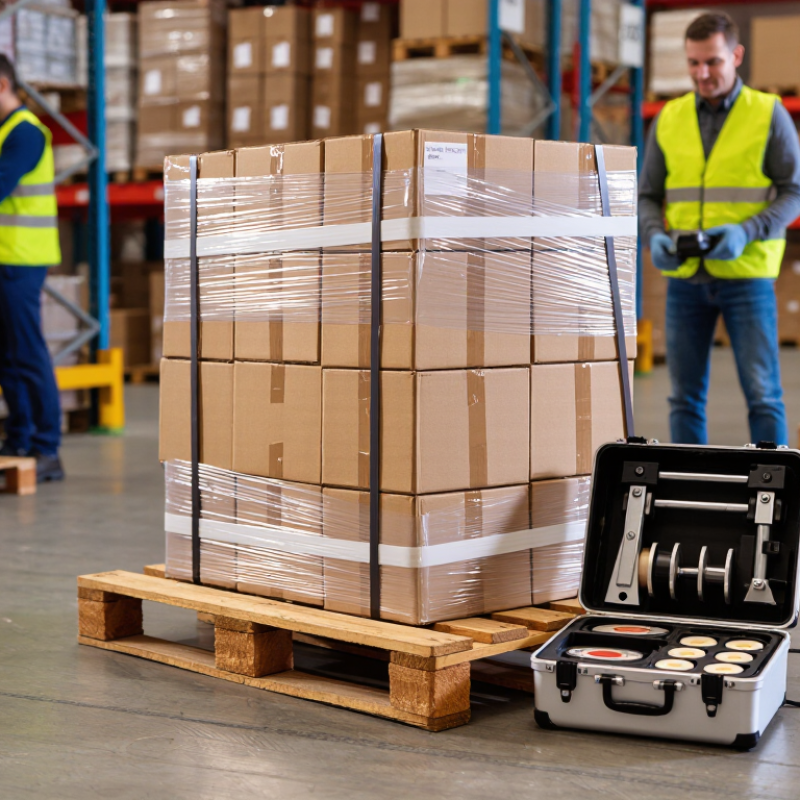
Global shipping exposes pallets to vibration, braking, humidity, and repeated handling. A small gap between cartons can become a serious load shift during ocean or road transport. Boxes may lean, crush, or fall when a pallet is moved by forklift.
A pallet banding kit helps stabilize the load before it leaves the warehouse. Strapping applies consistent pressure around cartons, while corner protectors reduce crushed edges. Proper tension also limits movement between layers. This can reduce product damage, sorting delays, and expensive rework at the destination. However, banding cannot correct poor stacking or weak packaging. That part is easy to forget.
In practical packing operations, teams should check the pallet from every side. The load should stay square, with heavier cartons placed below lighter ones. Use enough tension to secure the shipment, but avoid cutting into soft cartons. Over-tightening is a common mistake. It can create hidden damage before transit even begins. Weather-resistant materials may also help when pallets face damp docks or changing temperatures.
Tips: Test the secured pallet with a gentle push. Watch for rocking, loose layers, or exposed corners. Record the banding method and inspect one finished pallet from each packing shift. Photos can support training and reveal patterns that busy teams often miss.
QUICK LINKS
CONTACT US
Office: (+86) 755 23040566
Tel: (+86) 158 9965 5195
E-mail: sale@pcbledmodule.com
Skype: Hans@Rocket-PCB
Whatsapp: 86 1589965 5195
Office Address: 2207,Bid 4,He Gu Shan Hui Cheng,35#,Guang Tian RoYanluo street, Song Gang Town,518105 SHENZHENG, CHINA
Plant ADD.: No 69, Lianfeng North Road, Xianxi Area, ChangAn Town, Dongguan, China.


Copyright © 2025 Rocket PCB Solution Ltd. | All Rights Reserved Sitemap Friendship link: CNC machining heat sink